

The term "Deal Sourcing" usually implies the act of locating a property. But finding a distressed seller is completely meaningless unless you know how to build the financial framework that makes the property investable. This is deal packaging property.
If you send a WhatsApp message to an investor saying, "I found a 3-bed house in Leeds for £100k, it needs £20k work and will rent for £1,000 a month," you are an amateur sourcing lead. If you send an investor a 14-page PDF outlining the exact comparables, the builder's quote itemization, the post-refurbishment valuation (GDV), and a stress-tested 5-year cash flow model—you are a deal packager. And you can charge 3 times as much for your fee.
In this guide, we break down exactly what a deal packager business entails, how to structure the ultimate investor dossier, and how packaging differs fundamentally from generic sourcing.
Part 1: Deal Packaging vs Sourcing
Many people use the terms interchangeably, but there is a clear distinction in the professional market.
Sourcing
Sourcing is the raw acquisition machine. A "sourcer" excels at generating leads. They send 10,000 direct mail letters, make 500 cold calls a week, and scrape Land Registry data to get their foot in the door with motivated sellers. Sourcing is about hustle and lead generation.
Packaging
Packaging is the analytical and presentation machine. A "packager" takes the raw lead generated by the sourcer and turns it into a financial product. They arrange access for a builder to quote the exact refurbishment costs, they pull official comparables from PropertyData, they calculate the exact ROI (Return on Investment) and ROCE (Return on Capital Employed), and they compile a pristine brochure. Packaging is about financial structuring and trust.
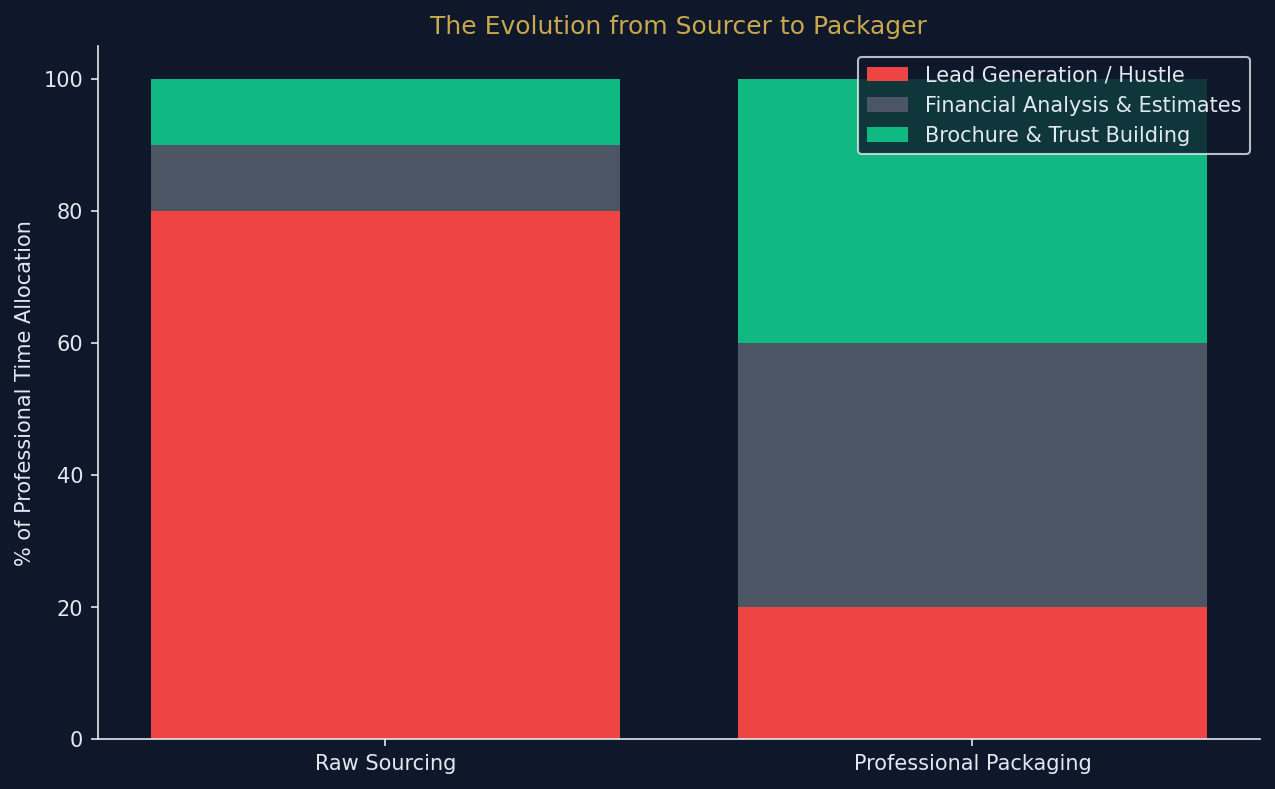
Many top-tier property sourcing companies UK split these roles. The junior staff source, and the senior directors package.
Part 2: How to Package a Property Deal
If you want an investor to transfer a £3,000 to £5,000 sourcing fee to your limited company, your deal package (the brochure) must drastically lower their perceived risk.
Here is exactly what an institutional-grade deal pack must contain:
1. The Executive Summary
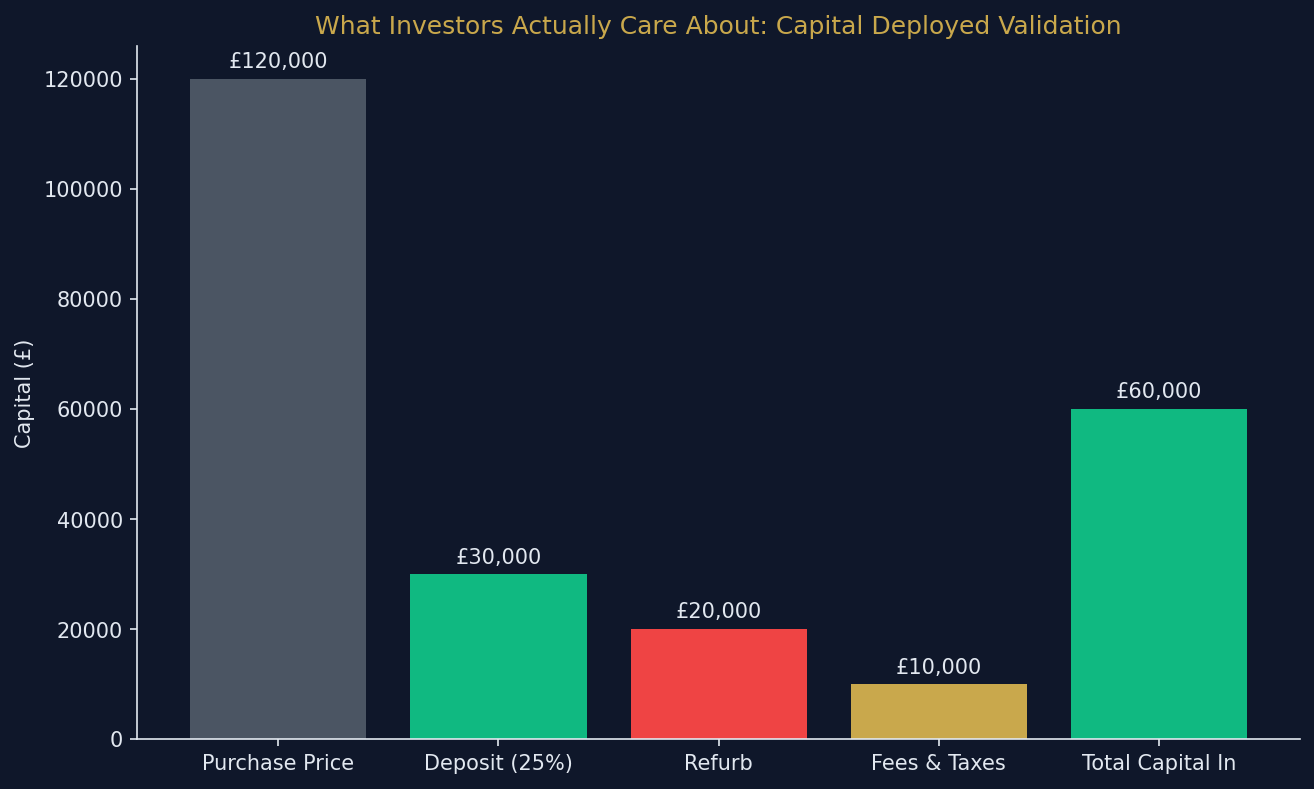
Investors are busy. The first page of your package should not be a history of the town. It should be the numbers. You need a clear table showing:
- Agreed Purchase Price: £120,000
- Estimated Refurbishment Cost: £25,000
- Legal & Stamp Duty Costs: £6,500
- Sourcing Fee: £4,000
- Total Capital Required: £45,500 (assuming a 75% LTV mortgage on the purchase price)
- Gross Development Value (GDV): £180,000
- Monthly Rental Income: £1,200
- Net Gross Yield / ROCE: 14.5%
2. The Comparables (Comps)
You cannot state a property will be worth £180,000 after refurbishment without iron-clad proof. Your pack must include at least three Sold Comparables (properties within a 0.25-mile radius that sold in the last 6 months in a fully refurbished condition for £180,000 or more) and three Rental Comparables (similar properties currently rented for £1,200).
If you do not include comps, the investor will assume you are inflating the numbers to make the deal look better than it is.
3. Schedule of Works (Refurbishment Breakdown)
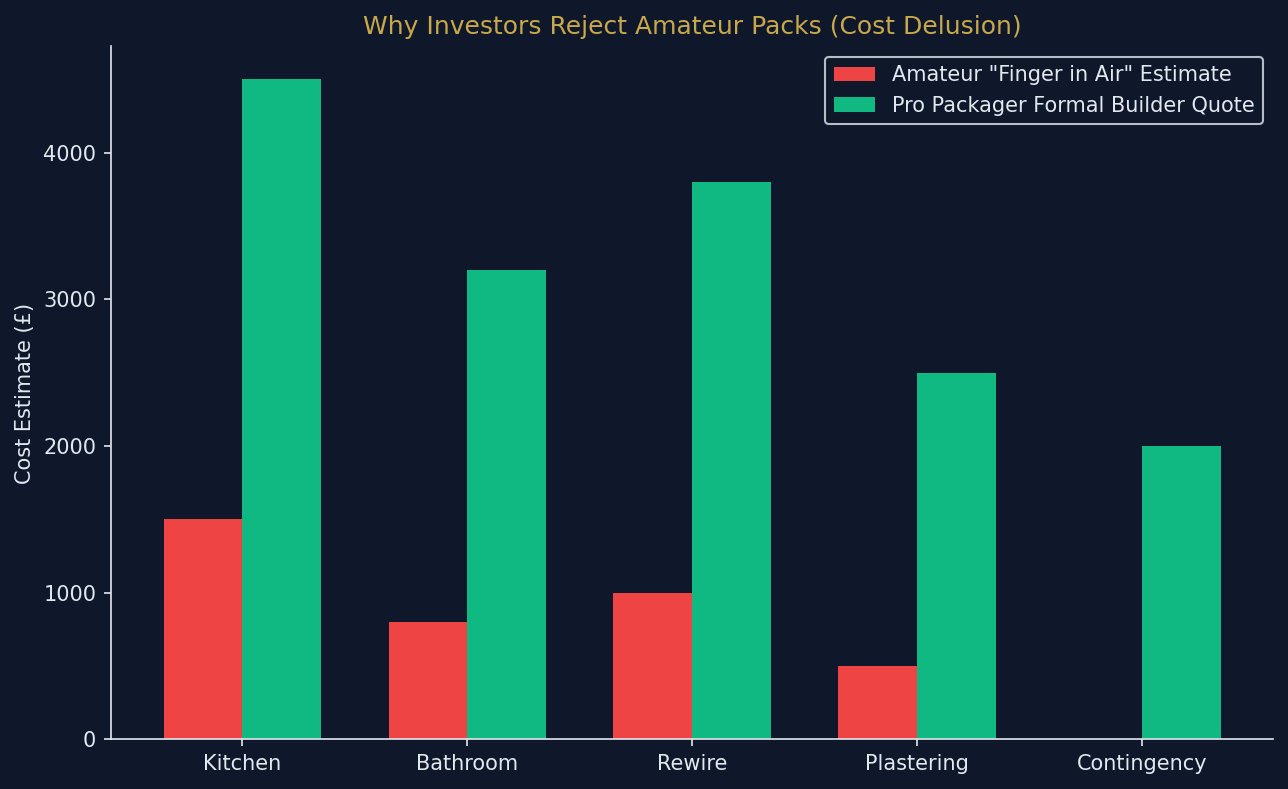
Saying "it needs £20k of work" is a massive red flag. Investors want itemization. Your package should include a breakdown:
- New kitchen installation: £4,500
- Bathroom suite & tiling: £3,200
- Full rewire: £3,800
- Plastering (4 rooms): £2,500
- Decorating & Carpets: £4,000
- Contingency (10%): £2,000 Total: £20,000
Including a formal quote from an accredited local builder completely de-risks the project for an absentee investor.
Part 3: Structuring the Transaction
The mechanics of how the legal transaction actually completes is a core component of a deal packager business.
Option A: The Introduction Model
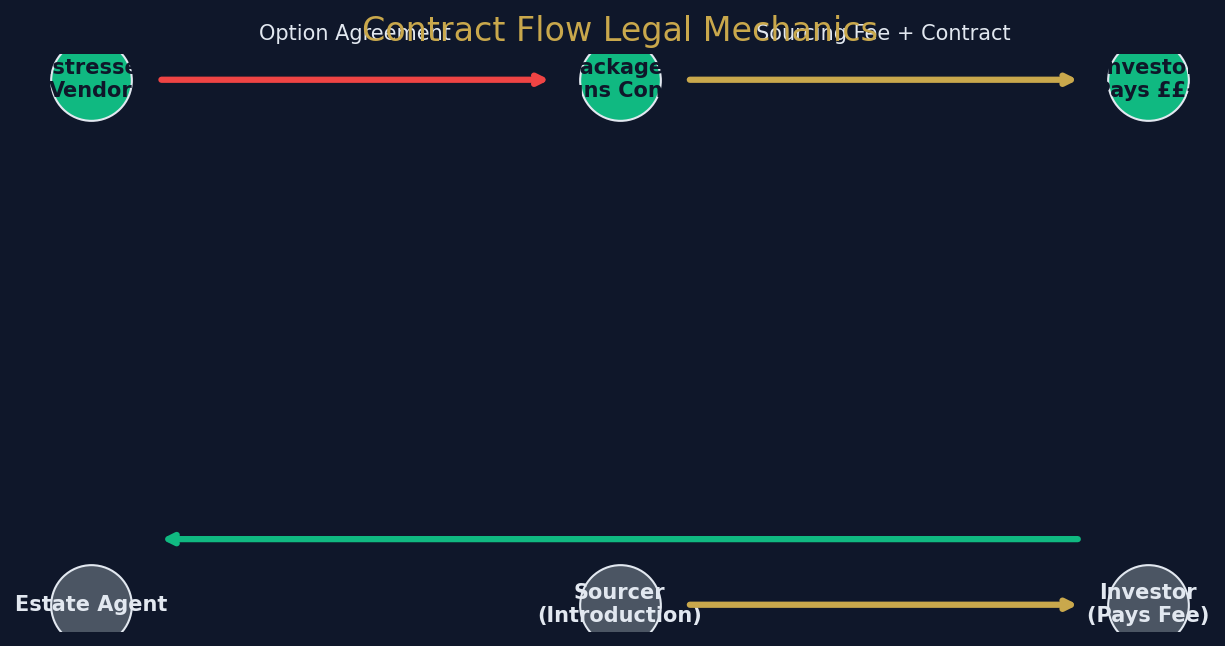
The packager finds a property currently on the open market with an estate agent but negotiates a heavy discount (Below Market Value). The packager signs a sourcing agreement with the investor. The investor pays the sourcing fee directly to the packager. The packager then tells the estate agent that the investor is the buyer, and the investor completes the purchase normally.
- Pros: Very low capital risk for the packager.
- Cons: Estate agents sometimes bypass the packager if fee protection isn't securely contracted.
Option B: The Assignable Contract (Option Agreement)
The packager limits risk by going directly to the distressed vendor (bypassing estate agents completely). They sign a legal contract to buy the property for £100,000. However, the contract has a clause that allows them to "assign" the right to buy the property to a third party (the investor) for a fee (e.g., £5,000).
- Pros: Total control. The investor cannot bypass the packager because the packager physically holds the right to buy the house.
- Cons: Requires heavier legal setup and compliance.
Part 4: Compliance for Deal Packagers
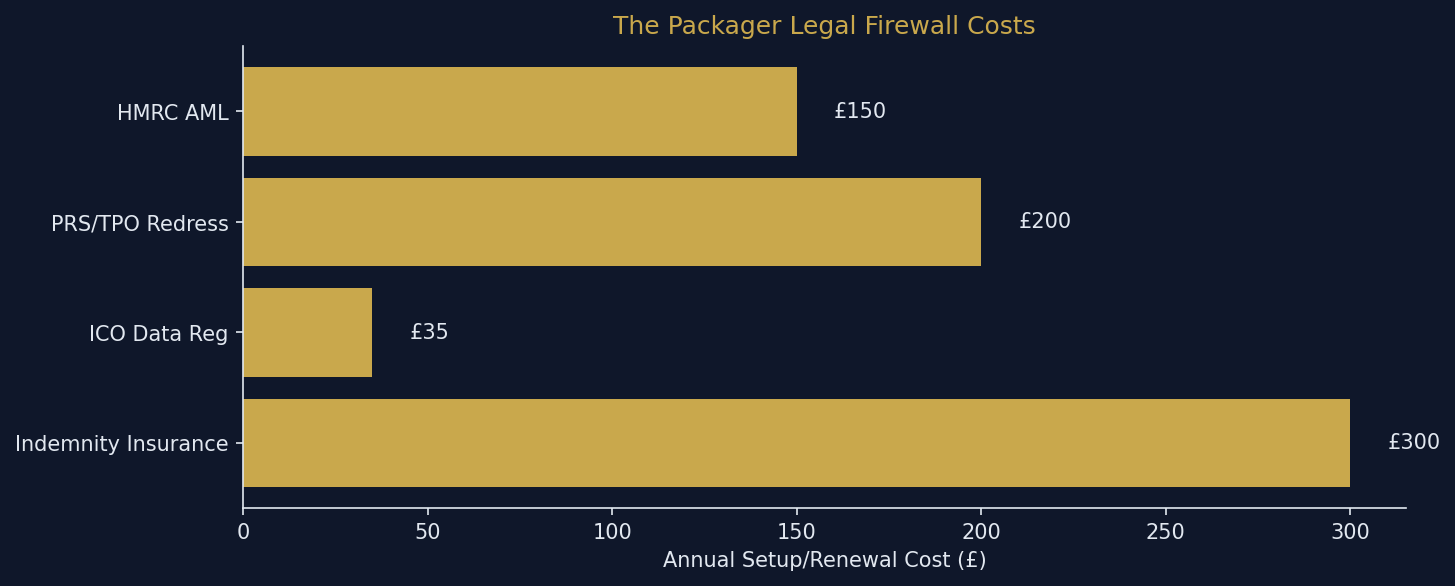
If you are packaging and selling property deals in the UK, you are legally acting as an estate agent under the Estate Agents Act 1979. This is an absolute, non-negotiable reality. To prevent severe fines and criminal prosecution, your deal packager business must have the following compliance framework set up before taking a fee:
- HMRC Anti-Money Laundering (AML) Registration: You must verify the identity and source of funds for every investor purchasing your packaged deals.
- Property Redress Scheme (PRS): You must be a member of either the PRS or the TPO (The Property Ombudsman) to give your investors an independent body for dispute resolution.
- Information Commissioner’s Office (ICO): You are handling highly sensitive financial data (passports, bank statements). You must be registered under GDPR.
- Professional Indemnity Insurance: Protects you if you make a mathematical error in your deal package that causes an investor to lose capital.
Part 5: Building a Trust-Based Network
You do not need 5,000 followers on Instagram to be a successful deal packager. You only need five serious, liquid investors. If you can reliably provide one solid, accurately packaged Buy-To-Let or HMO to five different investors every quarter, you have built a £100,000+ a year business.
This relies entirely on your presentation. Building a comprehensive property investment business plan UK is exactly what serious investors want to see mirrored in your deal packs.
Don't send WhatsApp messages. Send institutional dossiers. Over-deliver on the comparables, provide three video walk-throughs of the asset, secure the builder quotes in writing, and demonstrate a pessimistic (stress-tested) cash flow model. That is how you transition from an amateur sourcer to a professional deal packager.
Stop being a landlord. Start being an investor.
Shaded Canvas introduces serious capital to vetted UK property opportunities — targeting 12–16% net returns.
Start Investing →