

$5.1 Trillion. That is the value of small businesses currently owned by retirement-age baby boomers.
We are witnessing the "Silver Tsunami", the largest wealth transfer in history. As these boomers retire, they need someone to take over their operations. This creates a massive opportunity for you to position yourself to gain from this transfer.
But the question remains: How can you buy a business if you don't have millions in the bank?
This guide covers why you should buy instead of start, the best recession-proof industries to target, and the "cheat codes" for funding a deal with little to no money down.
Why Buy a Business Instead of Starting One?
Many aspiring entrepreneurs assume they must start from scratch. However, "Acquisition Entrepreneurship"—buying an existing company—is often the safer path.
I have learned the hard way that I don’t want to do the grunt work of starting a company. I prefer taking a company from Level 2 to Level 10, rather than Level 0 to Level 1.
The Statistics of Failure
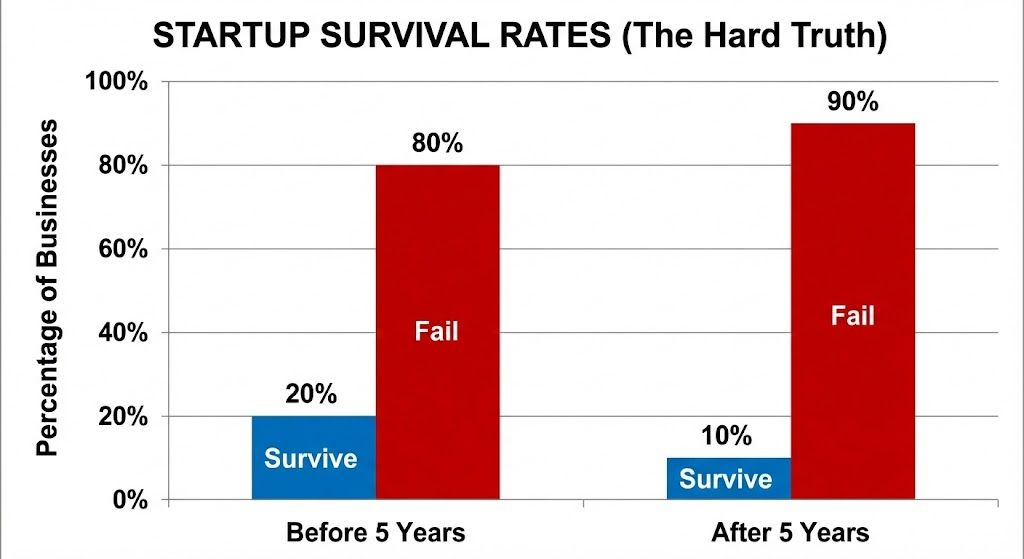
When you buy an established business, you are buying an asset that has stood the test of time. It is faster, potentially cheaper, and significantly less risky than grinding for 10 years to build a brand from nothing.
The Buyer’s Advantage
Currently, less than 20% of all businesses marketed for sale are actually sold. This gives you strong leverage when constructing a deal. You are spoilt for choice, and you can often acquire assets at a tax-efficient rate.
The Risks: Reasons Against Buying a Business
It is important to be realistic. Buying a business is not passive income (at least not initially).
Best Small Businesses to Buy in 2026
Which businesses are the most profitable? It depends on your location, but you should generally look for "boring," recession-resistant businesses.
According to SmallBusinessPro, the most profitable small business sectors in the UK and US often include:
Pro Tip: Look for a business that satisfies Maslow’s Hierarchy of Needs.
From physiological needs (food) to safety needs (property services), businesses that solve fundamental human problems are less likely to go under during economic downturns.
Where to Find Businesses for Sale
There are multiple websites and brokers worldwide. However, the best deals are often done off-market directly with the owner.
If you want to browse listed companies, check out:
Strategy: Don't just browse. Pick the brain of established business owners in your area. Even if they aren't selling yet, their insight on how they solve problems is invaluable.
How to Buy a Business with No Money Down
This is the "cheat code." You do not need to use your own cash to acquire a company. Here are the four main ways to finance a business purchase:
1. SBA Loans (Small Business Administration)
If you are in the US, the government-backed SBA loan is a powerful tool. The bank may lend you 90% of the purchase price.
2. Seller Financing (The Holy Grail)
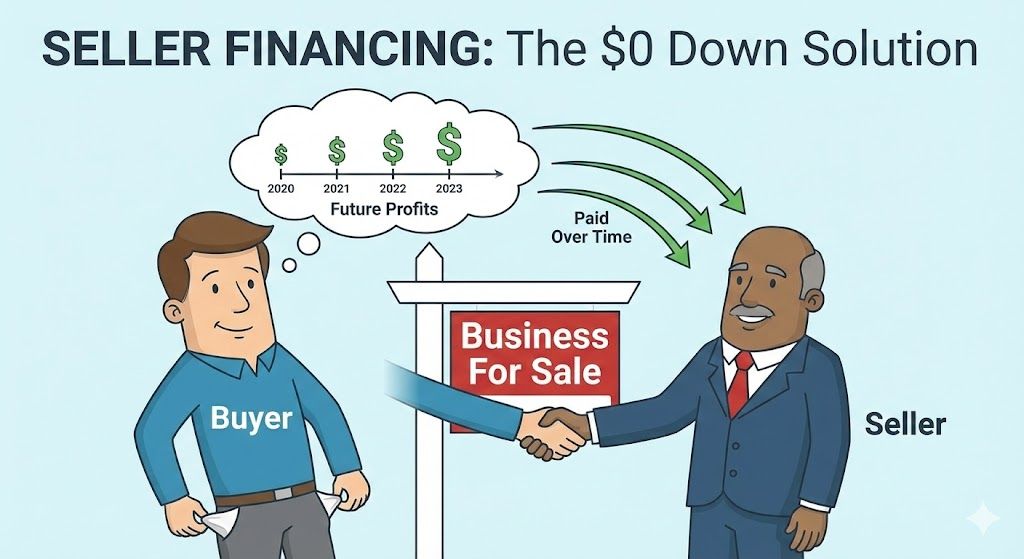
This is how you buy a business with $0 down. You agree to pay the seller using the future profits of the business.
3. Investors
You can raise capital from angel investors or partners. This is the most expensive money because you are giving away equity (ownership) forever.
4. Your Own Money
This is the most risky method, as you are 100% liable. Avoid this if possible.
How to Structure the Deal
Negotiation is about leverage. As Codie Sanchez says:
"If you control the terms, you control the price."
You can either accept the seller's price and dictate the terms, or accept their terms and dictate the price.
Summary: Your Next Steps
The first deal is the hardest. To start:
Don't wait for the opportunity to come to you. Go out and buy your freedom.
📚 Related Reading
- Buy dirt
- How I save nearly £2,000 a Year on Groceries for a Family of 4
- How to Improve Company Cash Flow: 4 Proven Ways
- Hobbies That Make Money: Real "Cheat Codes" for Turning Your Passion Into Profit
- How Environment Affects Business Success
Stop being a landlord. Start being an investor.
Shaded Canvas introduces serious capital to vetted UK property opportunities — targeting 12–16% net returns.
Start Investing →

