

If you are reading this, you are likely staring at a spreadsheet wondering where the money went. I have been there. I’ve read the standard advice from the big banks on how to improve company cash flow: "send invoices earlier," "negotiate with suppliers," or "cut back on coffee."
While that advice isn't wrong, it is slow. It’s playing the game on Hard Mode.
I am going to share the "cheat codes"—the aggressive, structural strategies I used to go from a stressed police officer earning £33k to owning a £925,000 property portfolio and a thriving business in just 2.5 years.
As Bruce Lee said, "Take what is useful and discard what is not." Here is how you fix your cash flow, not by pinching pennies, but by changing your business model.
The "Cheat Code" Philosophy: Cash Flow is Oxygen
Most business owners confuse profit with cash flow. Profit is what you pay tax on; cash flow is what keeps the lights on. You can be profitable on paper and still go bust because your cash is tied up in dead assets.
To improve company cash flow radically, you need to do three things that banks rarely tell you:
Here is the breakdown of how I applied this to my business.
1. Stop Buying Assets—Control Them Instead
The biggest killer of company cash flow is capital expenditure. Traditional advice says "buy a building." I say control the building.
In the UK, renting a property to sublet it is often restricted. However, the "Cheat Code" is a commercial lease or a Lease Option Agreement.
How it Works:
Instead of dumping £50k–£100k of your company's cash into a deposit for a property, you sign a lease for 3–5 years. You agree to pay the landlord a guaranteed rent. In exchange, you get the right to use that property for your business (in my case, short-term rentals).
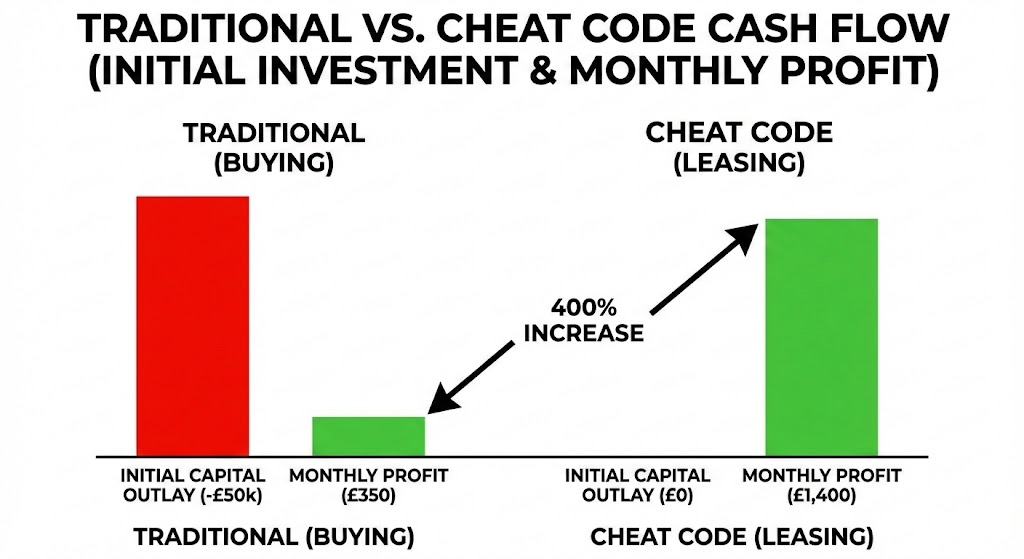
Why this improves cash flow:
You keep your capital in the business to scale operations, rather than locking it inside bricks and mortar. You get the benefit of the asset without the cash-draining liability of buying it.
2. Pivot to High-Velocity Revenue (The "Mini Hotel" Model)
If your business relies on slow-paying clients (Net-30 or Net-60 terms), your cash flow will suffer. You need a model that pays immediately.
I shifted my focus to Serviced Accommodation (SA)—essentially running mini-hotels using Booking.com and Airbnb.
The Math: Traditional vs. High Velocity
Let's look at a 1-bedroom apartment in Edinburgh.
Traditional Rental Model:
Serviced Accommodation Model (The Cheat Code):
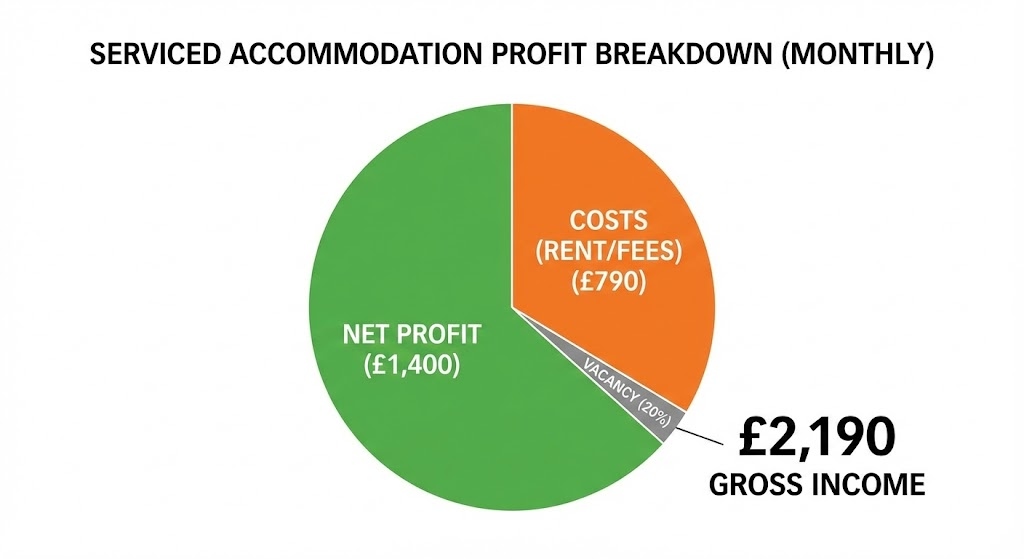
By changing the usage of the asset, I increased the cash flow from that single unit by 400%. This isn't just "saving money"; this is structurally changing how money flows into the company.
3. Systematize to Reduce Operational Drag
High cash flow usually comes with high effort—unless you systematize. To improve company cash flow, you must lower the "cost of effort." If you are doing the cleaning, you are losing money.
I applied the principles from Tim Ferriss's The 4-Hour Work Week:
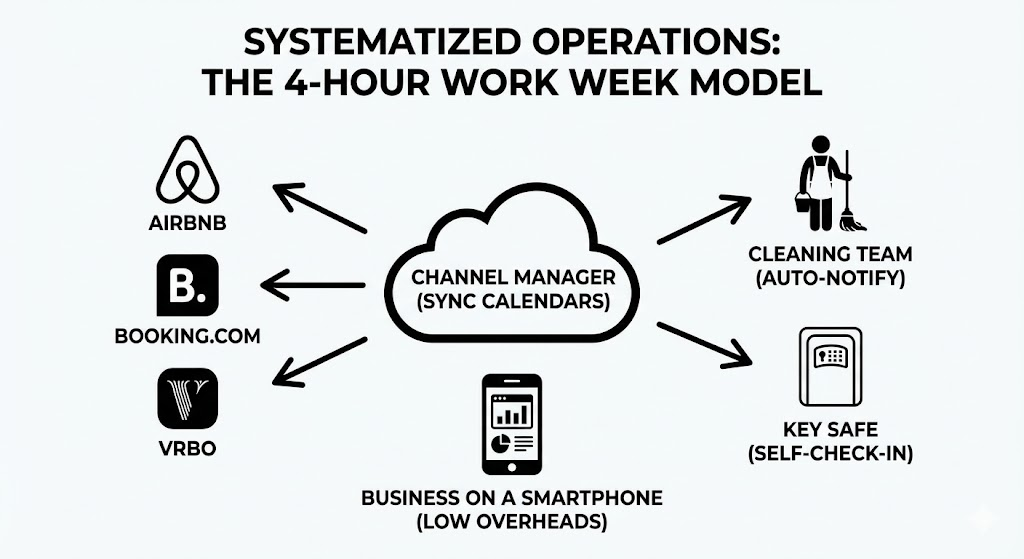
The result: The business runs on a smartphone. My overheads are variable (I only pay cleaners when I have guests), which protects cash flow during quiet months.
4. The "Lease Option" Safety Net
One pitfall of the "Control, Don't Buy" strategy is that you don't benefit if the property value goes up.
The Fix: Add a Lease Option clause to your contract.
This gives you the option (but not the obligation) to buy the property at a price agreed today, at the end of your 5-year lease.
Scenario A: Property prices crash. You walk away. Cash flow protected.
Scenario B: Property prices soar. You exercise the option, buy it at the old price, and instantly capture the equity.
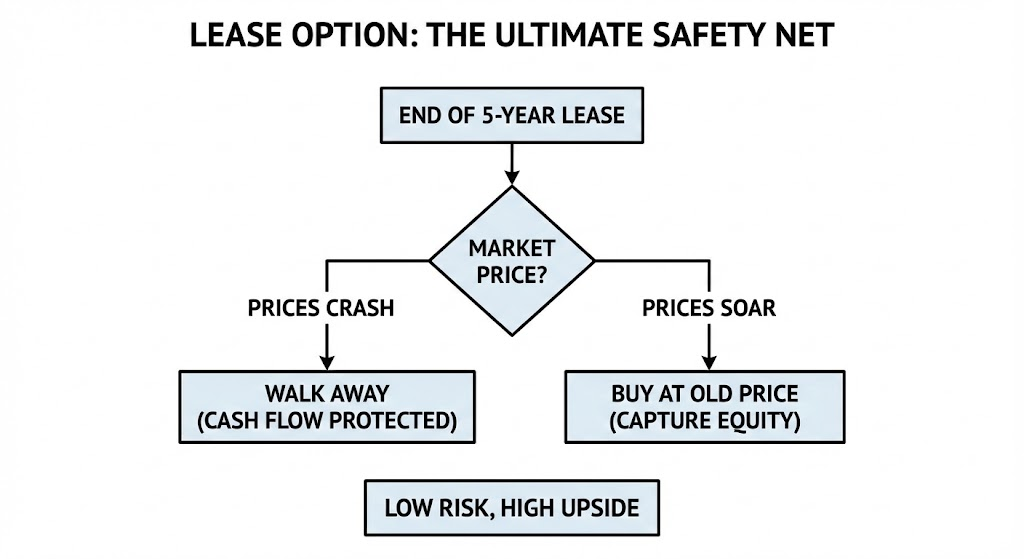
This is the ultimate hedge. You get the cash flow of a rental business with the upside of property ownership, with none of the risk.
Summary: Traditional vs. Cheat Code Cash Flow
Feature
Traditional Advice (Banks)
Mr Cheat Codes Way
Asset Strategy
Buy and hold (High capital cost)
Lease and control (Low capital cost)
Revenue Model
Long-term tenants / Invoices
Short-term guests / Upfront payment
Expansion Speed
Slow (Save for deposits)
Fast (Cash flow reinvestment)
Risk
High (Market crash hurts equity)
Low (Walk away at lease end)
Final Thoughts on Improving Cash Flow
You can't change the economy, and you can't change your circumstances overnight. But you can change your strategy.
If you want to improve company cash flow, stop looking for small savings. Look for structural changes. Leverage other people's assets, automate your operations, and secure high-margin revenue streams.
It’s not magic. It’s just a cheat code.
📚 Related Reading
- Buy dirt
- How I save nearly £2,000 a Year on Groceries for a Family of 4
- How to Reduce Taxes Legally: The UK Commercial Property Cheat Code
- Hobbies That Make Money: Real "Cheat Codes" for Turning Your Passion Into Profit
- How Environment Affects Business Success
Stop being a landlord. Start being an investor.
Shaded Canvas introduces serious capital to vetted UK property opportunities — targeting 12–16% net returns.
Start Investing →

