

I used to love playing video games. Sometimes, when I wanted an easier game, I would sit there finding cheat codes. This blog is exactly like that, but for real life.
If you find this useful, I would greatly appreciate it if you shared and subscribed.
Keep in mind: I am young (28), but I will share hard facts. As Bruce Lee says, "take what is useful and discard what is not." You can't change your circumstances, but you can change yourself.
The Question Most People Never Ask
A friend of mine (let's call him Client 6) wanted to make money passively. The standard advice he got was: "Put your money in a savings account" or "Buy an index fund for 7% returns."
That advice is playing the game on Hard Mode.
I was walking through Westfield at Shepherds Bush when I realized the secret lies in a simple question: How do banks make money?
If you understand their business model, you stop being a customer and start being a competitor.
The Banking Business Model Explained
Most people think banks are just safe vaults for cash. They aren't. Banks are businesses that buy and sell money.
So, how do banks make money? They rely on three main pillars, but one is the "Cheat Code" we care about.
The Mechanism:
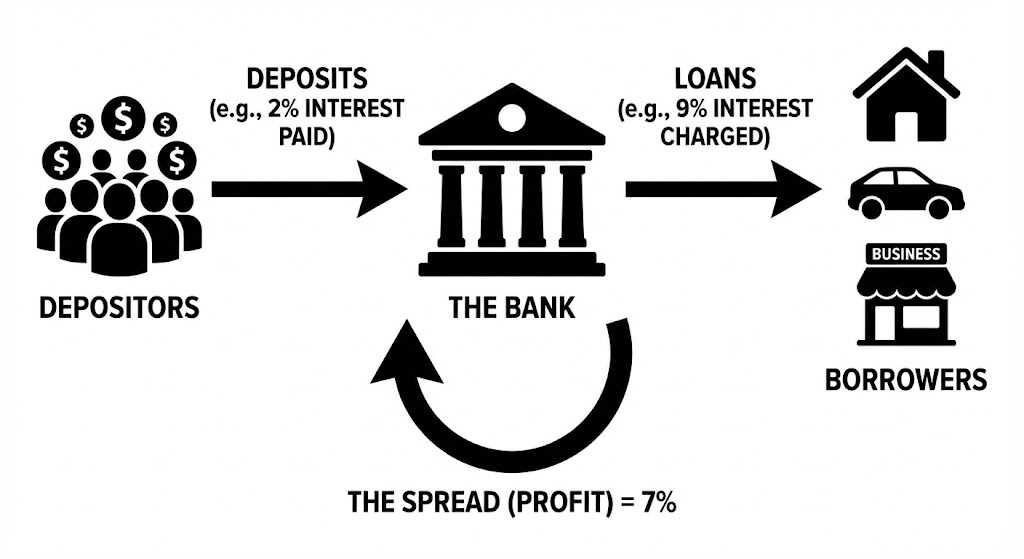
Banks "buy" money from you (depositors) by paying you a tiny interest rate (e.g., 1%). They then "sell" that same money to borrowers (mortgages, loans) at a much higher rate (e.g., 7% - 15%).
They keep the difference. This is called Arbitrage.
The "Spread" In Action
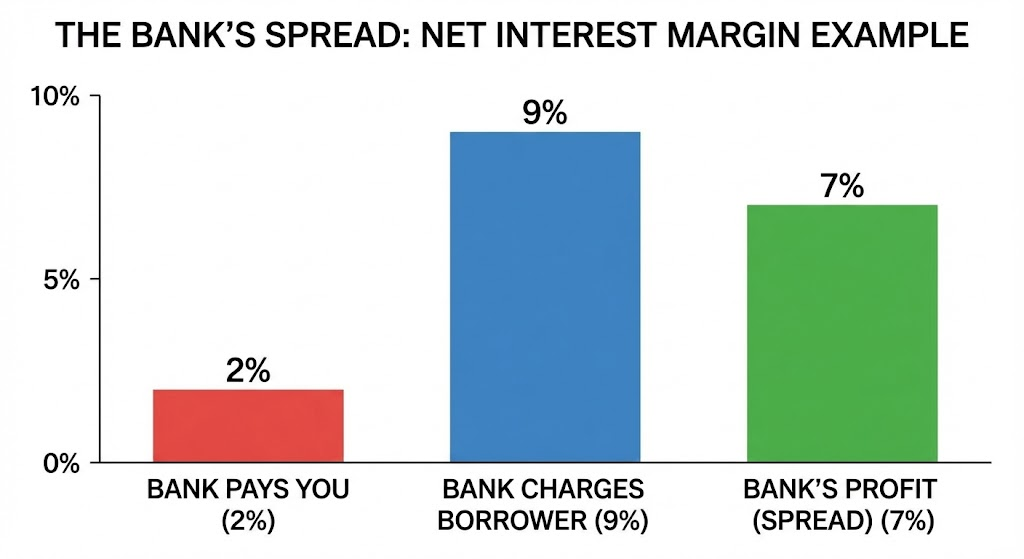
Let's look at the math.
The bank is making a 7% spread using your money, while taking almost zero risk because the loan is often secured against an asset (like a house or car).
How to "Be The Bank"
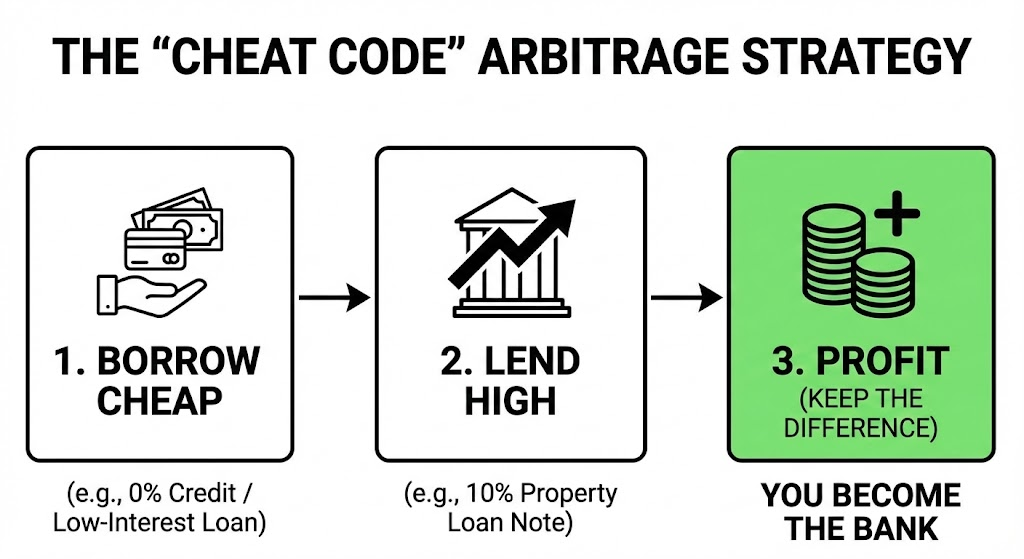
Once I understood how banks make money, I realized I didn't need to be a bank to use their strategy. I just needed to copy the Arbitrage model.
The Goal: Access capital at a low cost and lend it out at a high return.
I connected with a contact in the property world who offered Property-Backed Loan Notes. These are financial instruments where investors lend capital to developers (to build rooftop extensions or renovations) in exchange for a fixed return—often 8% to 12%.
Why haven't you heard of this?
Because High Street banks don't sell it. They use it. They take your money, lend it to developers, keep the 8%, and give you 1%.
The "Personal Arbitrage" Strategy
Here is how you can apply the banking model to your own finances:
Strategy A: The Cash Switch (Beginner)
Take the cash sitting in a low-interest bank account (losing value to inflation) and move it into a secured lending opportunity.
Strategy B: The Leverage Play (Advanced)
This is exactly what banks do.
Summary: The Numbers
Below is a breakdown of potential returns I found with this specific strategy compared to leaving money in the bank.
Feature
The Bank's Way
The Cheat Code Way
Who makes the profit?
The Bank (Shareholders)
You (The Investor)
Return on Capital
~2% (Savings)
~8-12% (Lending)
Underlying Asset
Loans/Mortgages
Property Development
Effort
Passive
Passive
Final Thoughts
This post isn't sponsored, but I managed to negotiate an extra 1% return on the first year if you decide to try his services. It’s a thank you to my readers. (Use code: MrCheatCODES).
If you want the full brochure and due diligence pack on how to execute this, mention it in the comments and I will email you the details.
Don't just ask "how do banks make money"—ask "how can I do it too?"
📚 Related Reading
- How to Reduce Taxes Legally: The UK Commercial Property Cheat Code
- The Drop Servicing Model: How I Closed a £120k Deal Without Doing the Work
- Property Equity Investors UK: The Hard Truth About Building Wealth Through Bricks in 2026
- Best Capital Growth Property UK: Where Property Prices Are Actually Heading in 2026 and Beyond
- Passive Income Property UK: How to Build a Rental Portfolio That Actually Pays You in 2026
Stop being a landlord. Start being an investor.
Shaded Canvas introduces serious capital to vetted UK property opportunities — targeting 12–16% net returns.
Start Investing →

