

Here's the thing: everyone panics when recession talks start. The suits on TV start
fear-mongering, your mate Dave suddenly becomes a financial expert, and everyone's asking the same question - "Should I sell everything?"
Turns out, recessions are absolutely loaded with opportunity if you know the real cheat codes. From my experience (and watching the big players), there's crazy money to be made when everyone else is running scared. You just need to know the rules.
Understanding Recession Investing: The Historical Cheat Code
Want to know how to invest during a recession? First, you need to understand what you're dealing with.
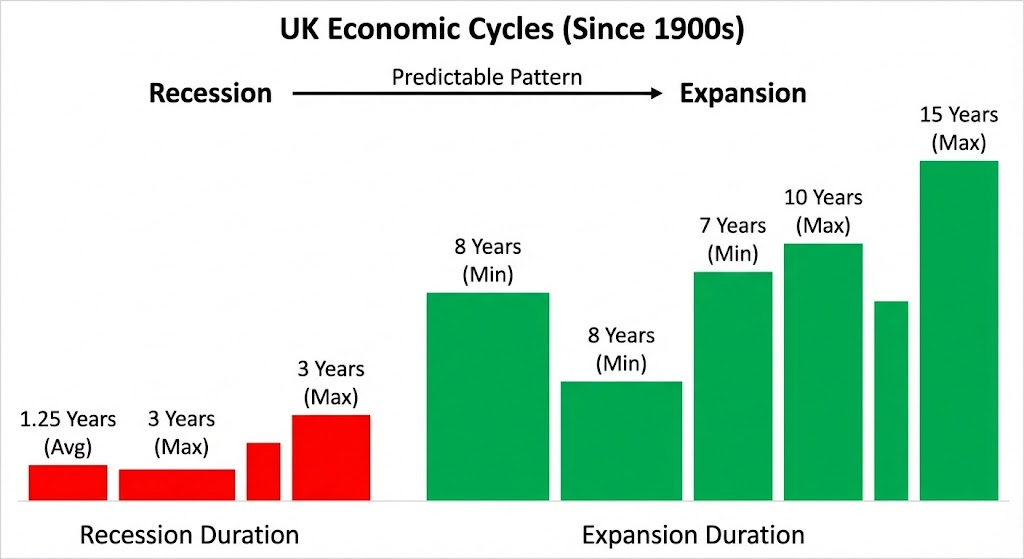
Since the 1900s, UK recessions have lasted a maximum of 3 years with an average of just 5 quarters (1.25 years). That's followed by 8-15 years of expansion. The pattern is so predictable it's almost boring.
Now the Covid-19 recession was a technical recession with a massive GDP decline in Q2. But here's what I noticed - the Bank of England's behaviour told a different story than what the media was saying.
I try to follow what the banks and big companies do. I figured they pay millions for data I don't have access to. So I watch what they do, not what they say. When they stop expanding and start "cutting the fat" (shoutout Patrick Bet-David), that's my signal.
The Cheat Code: Economic cycles are predictable. Preparation beats panic every single time.
Safe Haven Assets: Where Smart Money Hides
During bear market conditions, certain assets become absolute magnets for capital. These are your safe haven assets - the boring stuff that keeps you alive when everything's on fire.
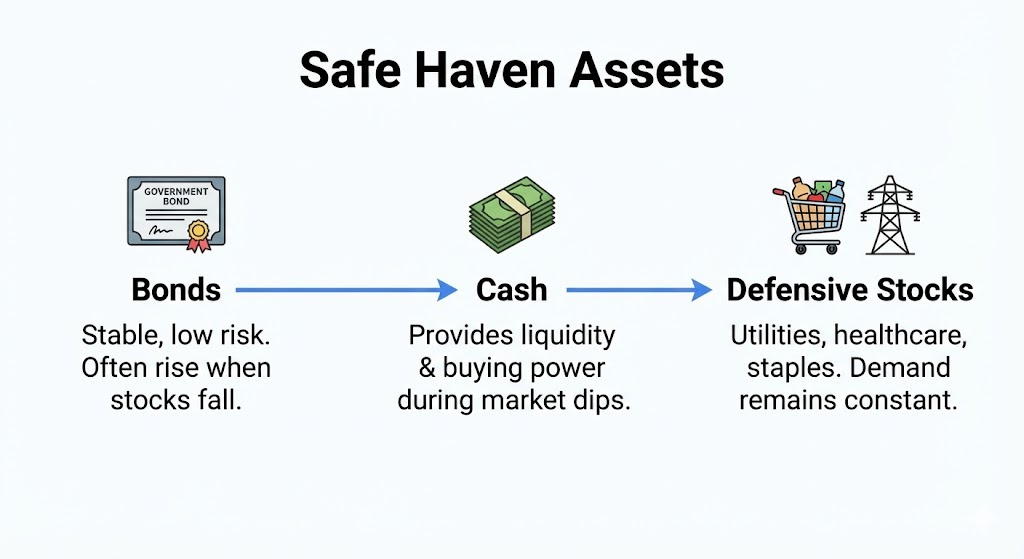
Bonds: The old faithful. When stocks crash, bonds usually rise. It's like they're best mates who never fight.
Cash Position: Having cash during recession investing isn't just about survival - it's about opportunity. When everyone's forced to sell, you're the one with buying power.
Defensive Stocks: Think utilities, healthcare, consumer staples. People still need electricity and medicine when times are tough. These sectors don't make you rich overnight, but they don't disappear either.
I converted my hobbies into assets during the last downturn. Took something I was spending money on and made it bring money back. If you're interested in how I made my hobbies pay me the "big bucks," watch this space.
The Cheat Code: When everyone's selling, be the one buying. But only with money you can afford to lose.
Portfolio Diversification: Don't Put All Your Eggs in One Basket
Here's where most people mess up recession investing - they either panic and sell everything, or they go all-in on one "sure thing."
The real cheat code? Spread your risk like you're making a sandwich. You want some safe stuff (bonds, cash), some defensive plays (utilities, healthcare), and maybe a small portion in beaten-down quality stocks.
I personally love property because it's what I understand. Everyone around me growing up was in property, sales, and finance. The demand will always increase (population growth) and supply will always be short (limited land).
"It's usually quicker to make a human than a house, so demand will always be higher" - that's my quote, by the way.
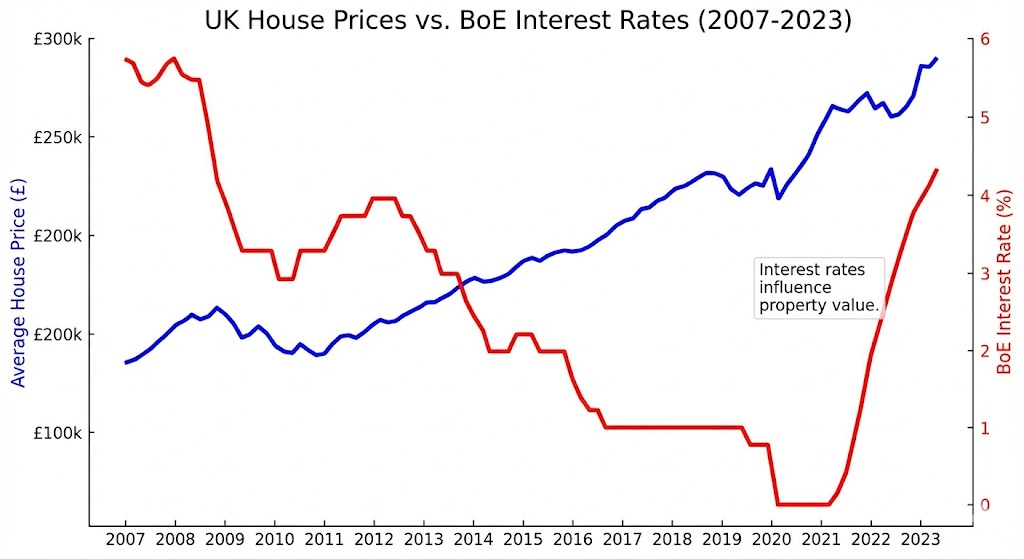
Look at UK house prices between 2007-2023. It scarily matches Bank of England interest rates. Go back further and you'll see the pattern - regardless of recession, property doubles on average every 10 years.
The Cheat Code: The best asset class is always one you understand and have experience in.
Market Timing: The Myth Everyone Believes
Everyone wants to know when to buy and when to sell during a recession. Here's the brutal truth - nobody knows exactly when the bottom hits.
But here's what I learned from watching Warren Buffett (the master of capitalising on recessions): you don't need to time the exact bottom. You just need to buy when there's "blood in the streets."
I haven't purchased a few more assets yet because I feel there isn't enough blood in the streets - channeling my inner Rothschild here. But if the numbers make sense right now (I don't like ifs), I'll always make the jump.
Ray Dalio (guy who spends millions on research) released a video on "The Principles of Dealing with the Changing World Order." Worth watching if you want the deep dive on cycles.
The Cheat Code: Don't try to catch a falling knife. Wait for the dust to settle, then move.
Long-term Strategy: Playing the Long Game
This is where the real money gets made during recession investing. While everyone's thinking about next month, you're thinking about the next decade.
Take a deep dive into your finances and question everything you spend money on. Better yet, look into making something you spend money on into an asset.
I looked at everything in my spreadsheet and cancelled all subscriptions. The strangest thing? I didn't feel any real change to my life. Found other (nearly as good) free options. My money lasted a ton longer.
Suggestion: Have a 1-2 month detox from all subscriptions. You'll get loads of offers asking you to sign up again at a discount.
Cut Liabilities (things that take money out of your pocket)
It's not new advice but it's timeless: "spend less than what you're making." There are two ways to reach wealth - save your way or build your way (both take massive work).
I try to do both. Keep expenses super low and stay used to living on a small percentage of income. This gave me freedom when transitioning industries without a job while studying/travelling.
The Cheat Code: Your monthly expenses are your biggest enemy during a recession. Cut them ruthlessly.
Advanced Recession Investment Strategies
Cryptocurrency During Recession
Here's something most financial advisors won't tell you - crypto can be both your best friend and worst enemy during downturns. Bitcoin often acts like a risk asset initially (drops with stocks), but historically recovers faster.
The key? Don't bet the farm. Crypto should be play money during recession investing - money you can watch disappear without losing sleep.
International Markets
When your home market's struggling, sometimes opportunities exist elsewhere. Different countries enter and exit recessions at different times. But this requires serious research and understanding of currency risks.
Real Estate Investment During Downturns
Property becomes absolutely fascinating during recessions. Motivated sellers, lower prices, better rental yields. But you need cash and nerves of steel.
I've seen people make generational wealth buying property during recessions. I've also seen people lose everything by overleveraging.
The Cheat Code: Recession investing in any asset class requires dry powder (cash) and emotional discipline.
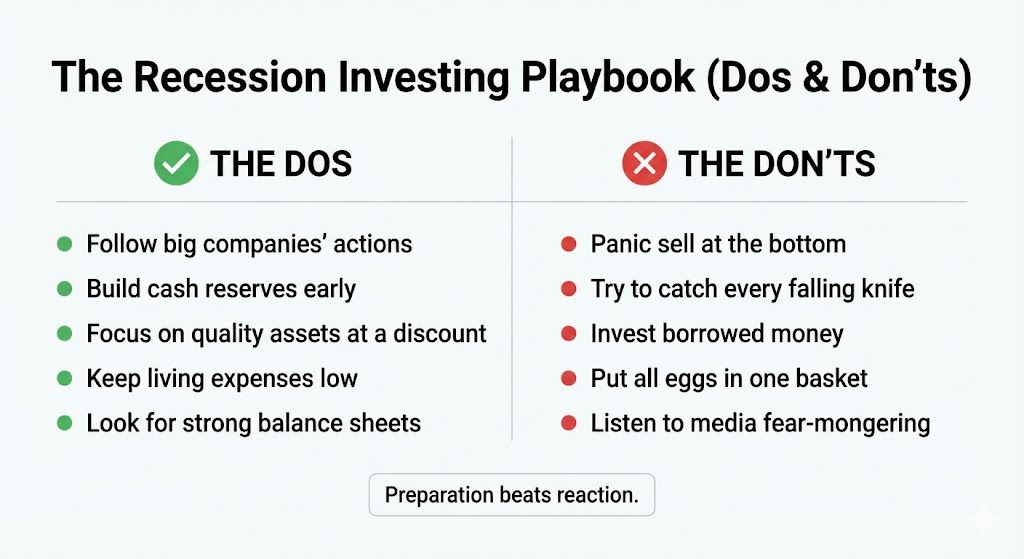
The Dos and Don'ts of Recession Investing
The Dos:
The Don'ts:
Remember that study about entertainment subscriptions? Average consumer in the US has 12 paid subscriptions. That's mental when you think about it.
The Cheat Code: Preparation beats reaction every single time.
Conclusion: Your Recession Investing Playbook
Learning how to invest during a recession isn't about getting rich quick - it's about positioning yourself for the inevitable recovery.
Everything has a cycle. Understand how each cycle works and where you are in it. Prepare for both growth and decline. See how you can provide the most value in each phase and profit in both.
Know the type of opportunity you're looking for - you can't find what you don't know you're seeking.
There are countless opportunities in every recession. I realised how much I missed out on when we came out of the 2020 downturn. Warren Buffett has at minimum doubled his wealth in every recession - and he didn't do it by accident.
The real cheat code for recession investing? Start preparing now, before you need to. Build your cash position, understand your risk tolerance, and know what assets you want to buy when they go on sale.
Because they will go on sale. They always do.
📚 Related Reading
- How to Reduce Taxes Legally: The UK Commercial Property Cheat Code
- The Drop Servicing Model: How I Closed a £120k Deal Without Doing the Work
- Property Equity Investors UK: The Hard Truth About Building Wealth Through Bricks in 2026
- Best Capital Growth Property UK: Where Property Prices Are Actually Heading in 2026 and Beyond
- Passive Income Property UK: How to Build a Rental Portfolio That Actually Pays You in 2026
Stop being a landlord. Start being an investor.
Shaded Canvas introduces serious capital to vetted UK property opportunities — targeting 12–16% net returns.
Start Investing →

