

When acquiring real estate off-market, utilizing an intermediary is often non-negotiable. But a single question dominates the mind of every investor: how much do property sourcers charge, and am I radically overpaying?
There is no universal, heavily regulated pricing structure for property sourcing fees UK. Unlike high-street estate agents whose fees generally cluster around 1.5%, deal sourcers apply drastically different pricing models depending on the region, the complexity of the asset, and whether they are offering a simple lead introduction versus a fully "packaged" deal.
In this data-driven guide, we break down every angle of the property sourcer fee structure. We will analyze real-world matrices by UK geography, expose the "hidden fees" inflating your acquisition costs, and definitively benchmark what a fair deal sourcing fee looks like on properties ranging from £150k to £500k.
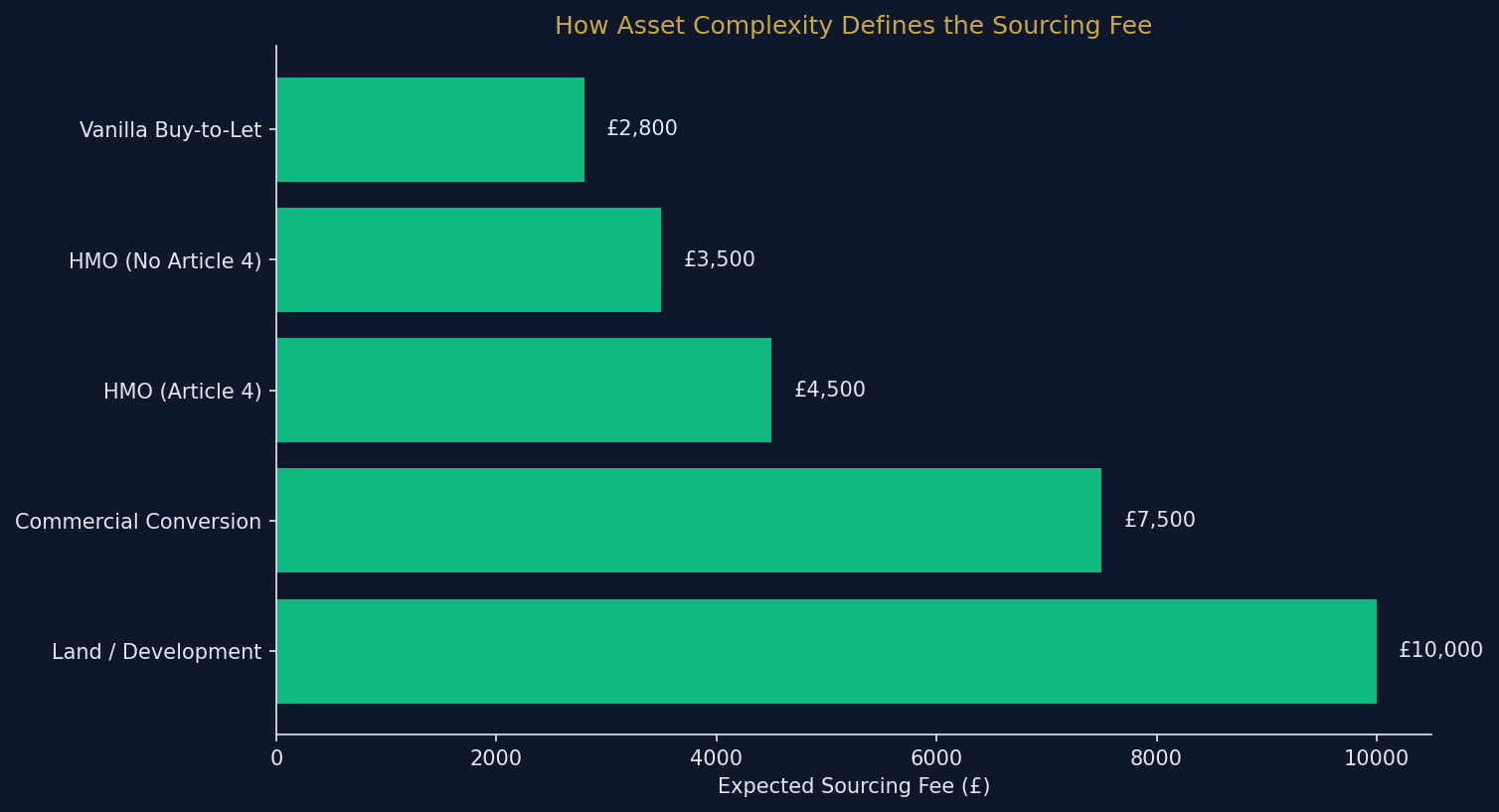
The Deal Sourcing Fee Structure: Flat vs Percentage
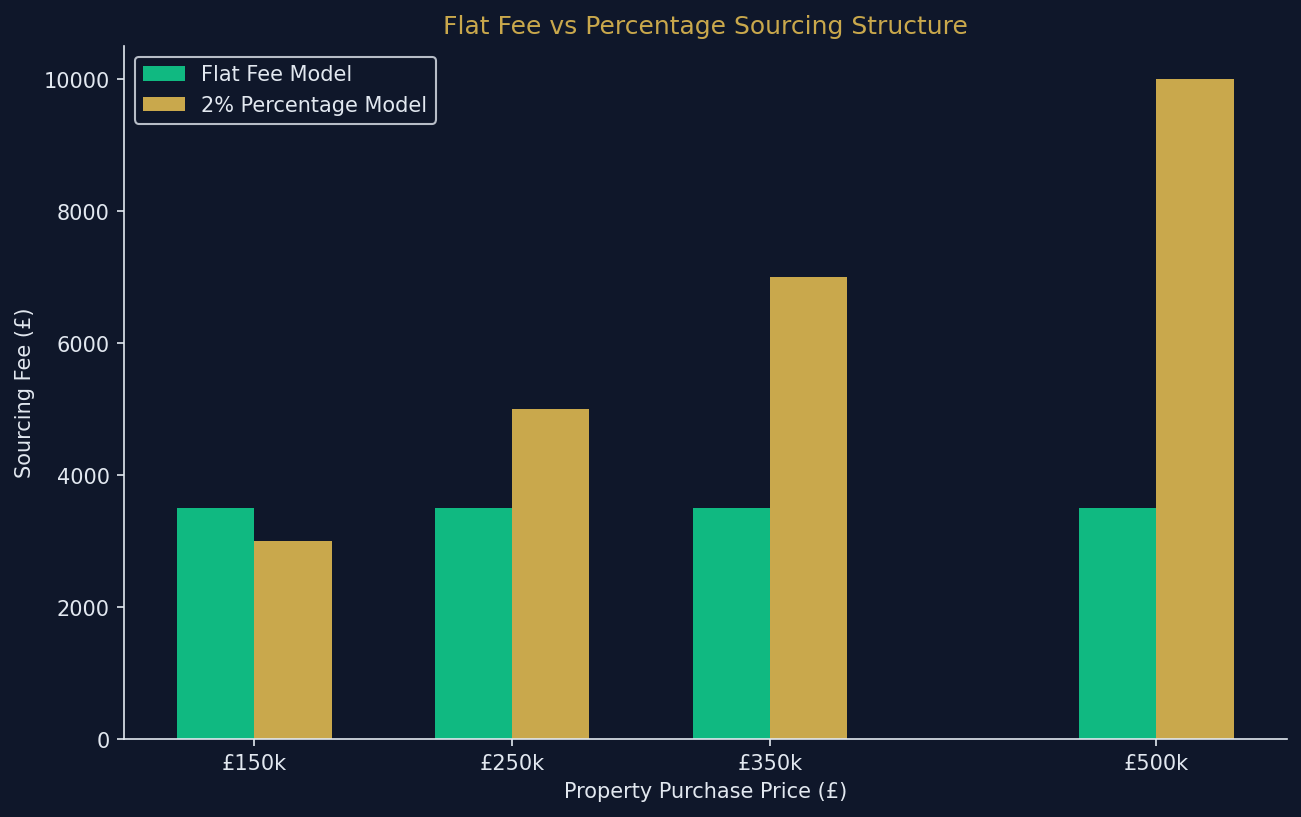
There are two dominant methodologies defining a property sourcing fee in the UK: the Flat Fee and the Percentage Fee. Knowing when you are being quoted the wrong model can save you thousands of pounds.
1. The Flat Fee Model (The Default for Standard BTLs)
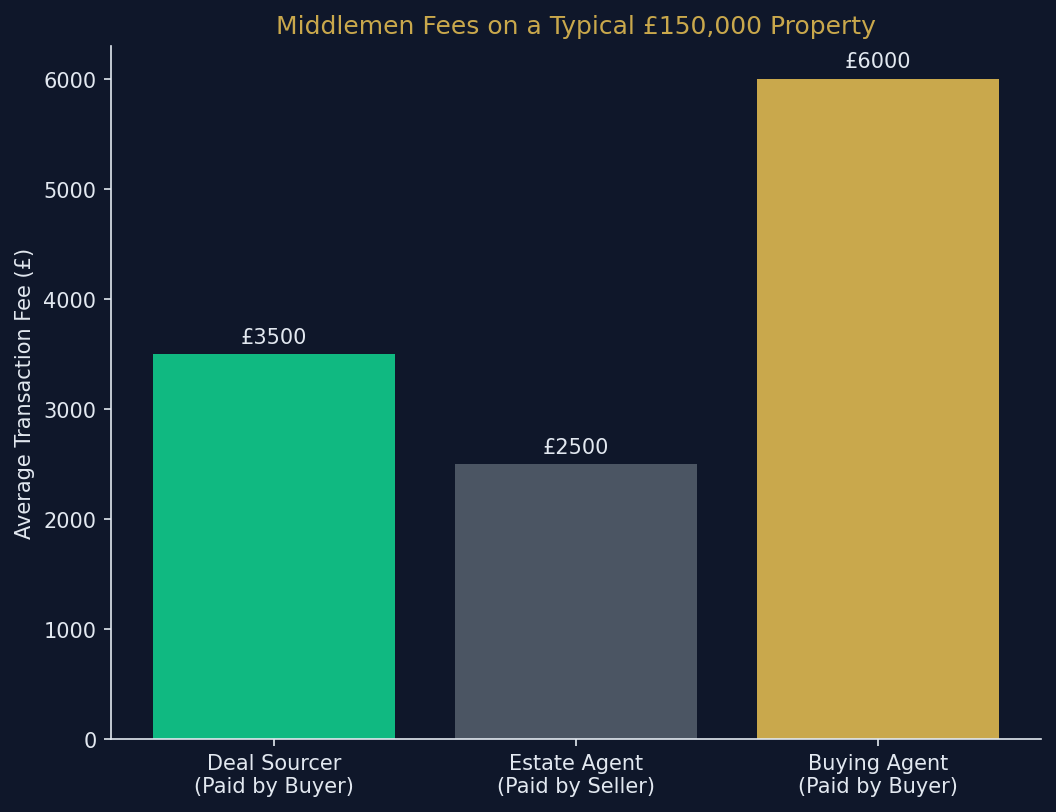
For standard residential stock—terraced houses, vanilla Buy-to-Let investments, or light refurbishment BRRR projects—sourcers operate on a fixed sum. In 2026, the national average flat fee sits firmly between £2,500 and £3,500.
Why flat? Because the labor required to source a £90,000 house in Liverpool is roughly identical to sourcing a £180,000 house in Birmingham. As an investor, you prefer a flat fee on mid-value properties because it caps your cash layout.
2. The Percentage Model (Used for HMOs and High-End Equity)
If you are moving into 6-bed House in Multiple Occupation (HMO) conversions, commercial properties, or major London property investments, sourcers will pivot to a percentage model—typically 1.5% to 3% of the purchase price.
These deals require vast amounts of complex due diligence, planning permission checks, and structural risk analysis. A flat £3,000 does not justify the 200+ hours of forensic work required for a commercial conversion.
Average Deal Sourcing Fees by Region
Because property values scale drastically by geography, the flat deal sourcing fee adjusts naturally to the local economy. An investor evaluating investment property in Manchester UK should expect to pay less than one acquiring stock in the South East, but more than one venturing deep into the North East.
- London & South East: £4,000 - £6,000+
- Manchester & Leeds: £3,000 - £4,000
- Midlands (Birmingham): £2,500 - £3,500
- North East & Scotland: £2,000 - £3,000
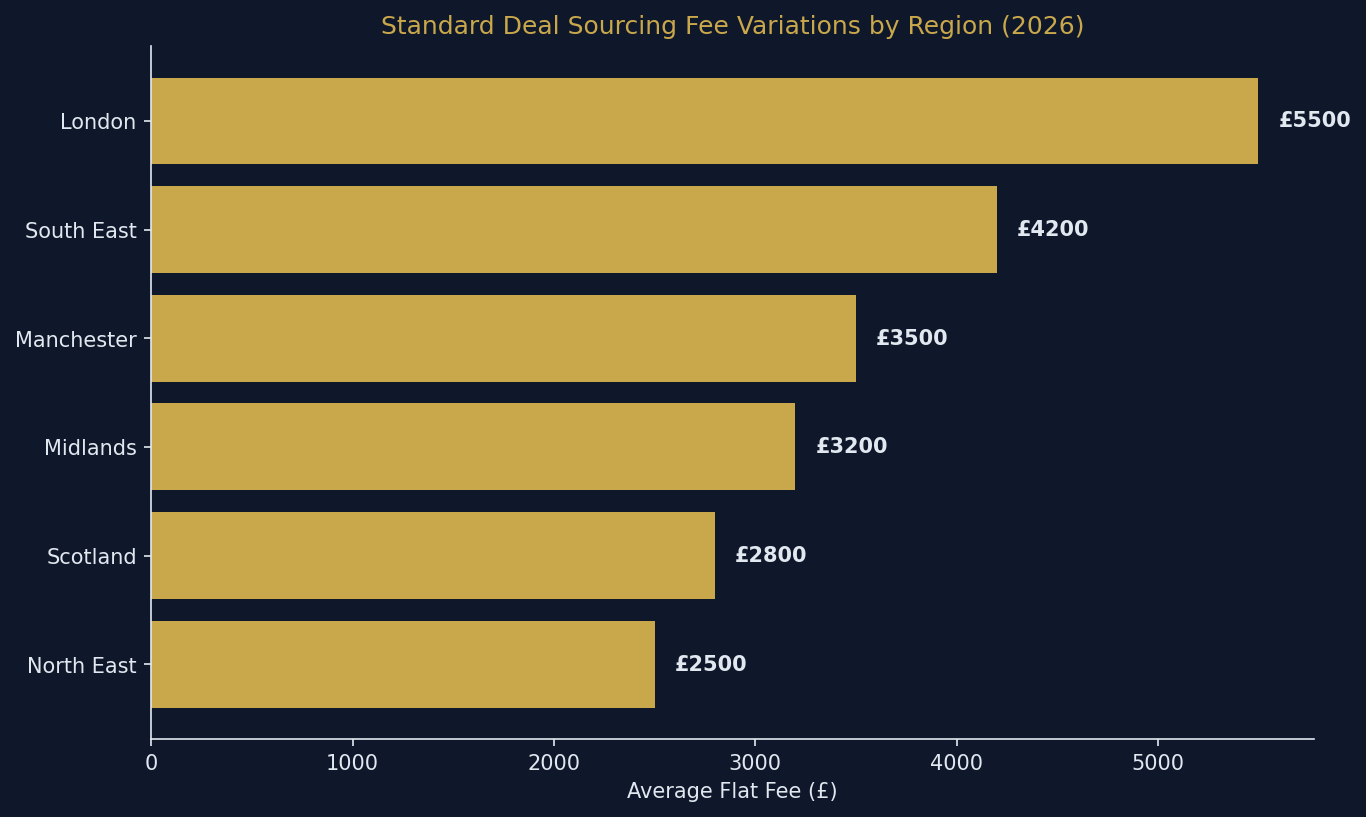
When reviewing regional metrics, remember to incorporate your sourcer fee into your initial capital requirements when determining how much deposit for investment property UK applies to you.
Lead Intro vs "Packaged Deals": What Are You Paying For?
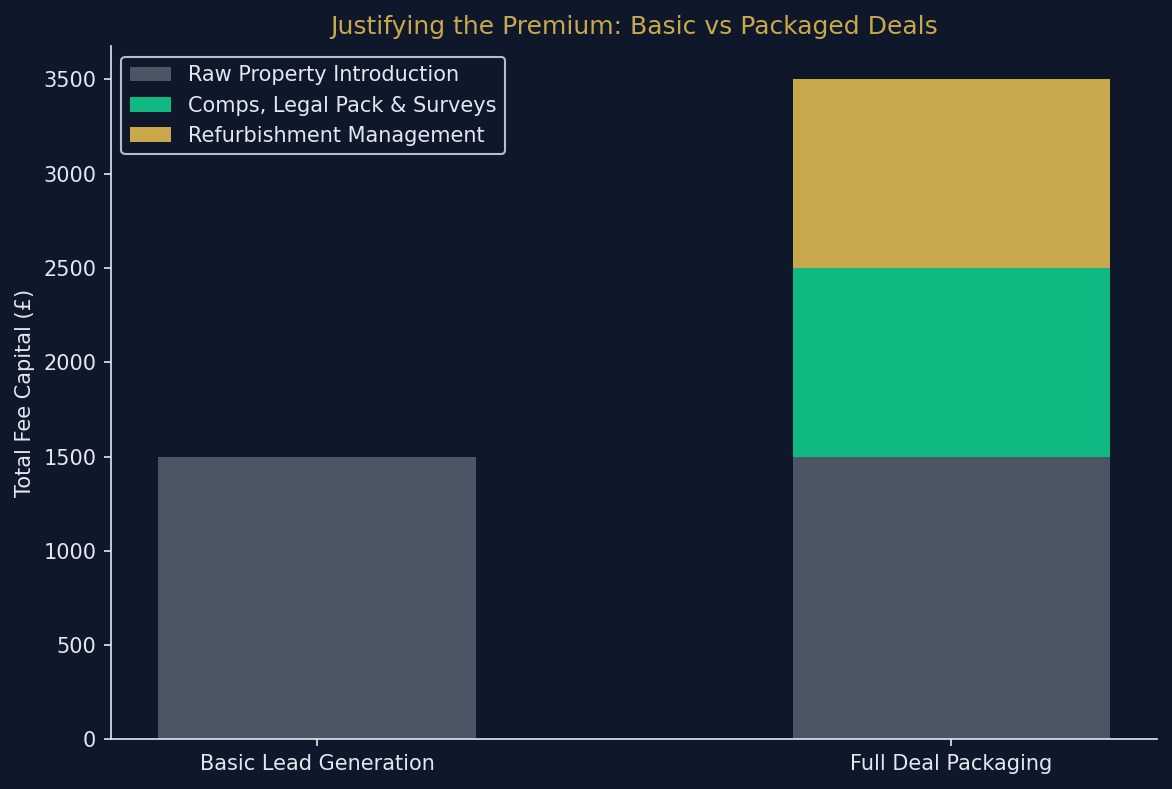
Not all property finder fees UK buy the same service. The industry divides sharply into two distinct product types.
Basic Sourcing (The "Lead Intro"): In this scenario, the sourcer simply connects you to an off-market vendor. You must execute your own comparables (comps) review, negotiate the builder quotes, and handle the risk analysis. Expected Fee: £1,500 - £2,000.
Deal Packaging: Elite property sourcing companies UK provide packaged deals. With this service, the £3,500 to £5,000 fee grants you a completely de-risked asset. You receive verified local comparable evidence, a fixed-price structural quote from a vetted builder, accurate GDV (Gross Development Value) calculations, and established rental demand metrics.
Exposing the "Hidden" Fees in Deal Sourcing
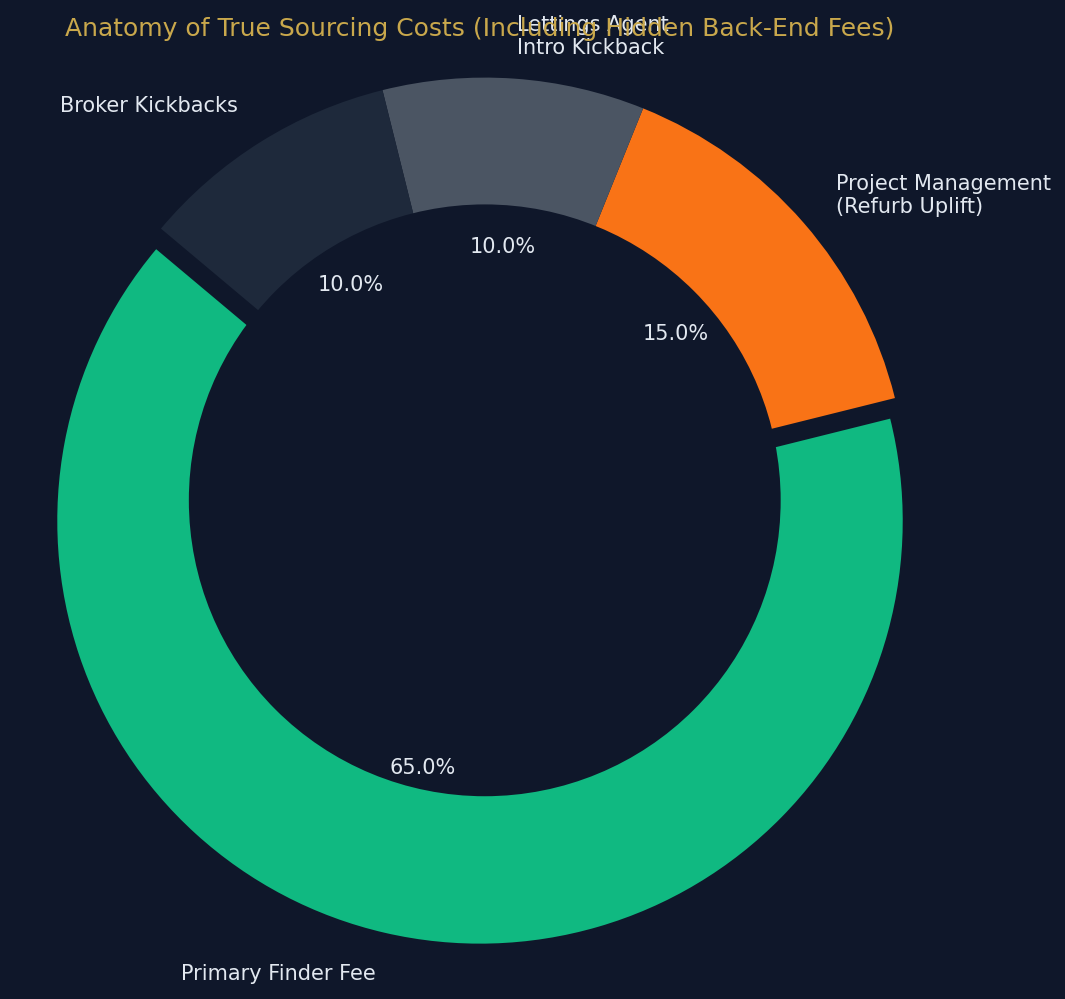
A critical warning: some sourcers bait investors with an impossibly low front-end fee, such as £1,000. They make their profit through undisclosed kickbacks.
If your sourcer pushes you toward a specific mortgage broker, conveyancing solicitor, letting agent, or builder, they are likely receiving a backdoor commission ranging from 10% to 20% on those services. While this isn't inherently illegal if explicitly disclosed, it deeply corrupts your Return on Investment calculations.
Furthermore, if the sourcer offers "project management" for the refurbishment, you must scrutinize the builder's quotes. It is common practice for untrustworthy operators to inflate a £15,000 refurbishment quote to £20,000 and pocket the £5,000 difference as a hidden property sourcer fee structure.
Always use independent legal and structural teams when possible. Alternatively, if utilizing property asset management companies UK, ensure their management fee percentages are transparent from day one.
What Does a "Fair Fee" Look Like? (ROI Impact)
Paying a £3,500 fee on a £250,000 property is negligible; it dissolves effortlessly into your closing costs. However, paying a £3,500 fee on an £80,000 house in the North East will dramatically compress your Year-1 Return on Capital Employed (ROCE).
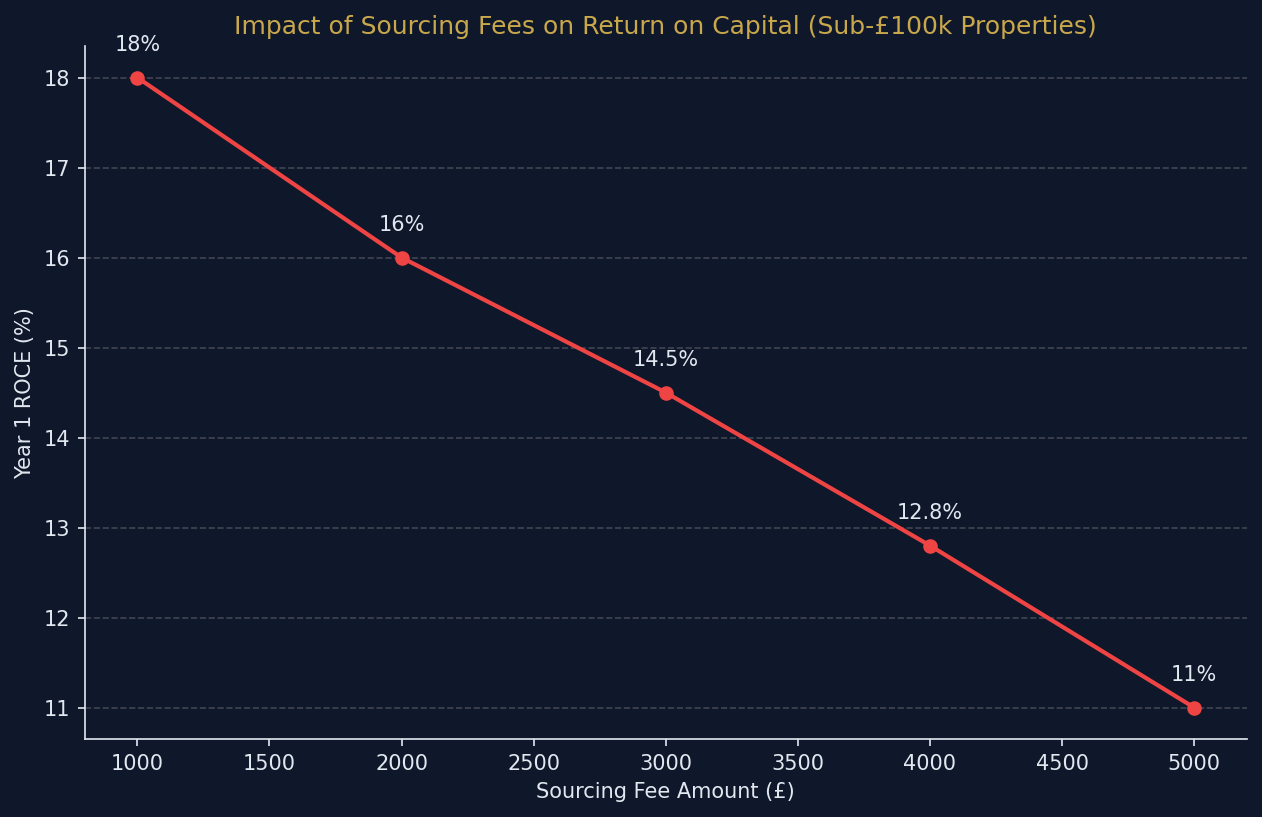
The true measure of a "fair fee" is calculated against the equity or yield captured.
Example Scenario: A sourcer finds a £240,000 house and negotiates the price down to £200,000 (a true BMV saving of £40,000). They charge you a £3,500 fee. In this scenario, paying £3,500 to acquire £36,500 in instant structural equity is an extraordinarily fair, highly profitable exchange.
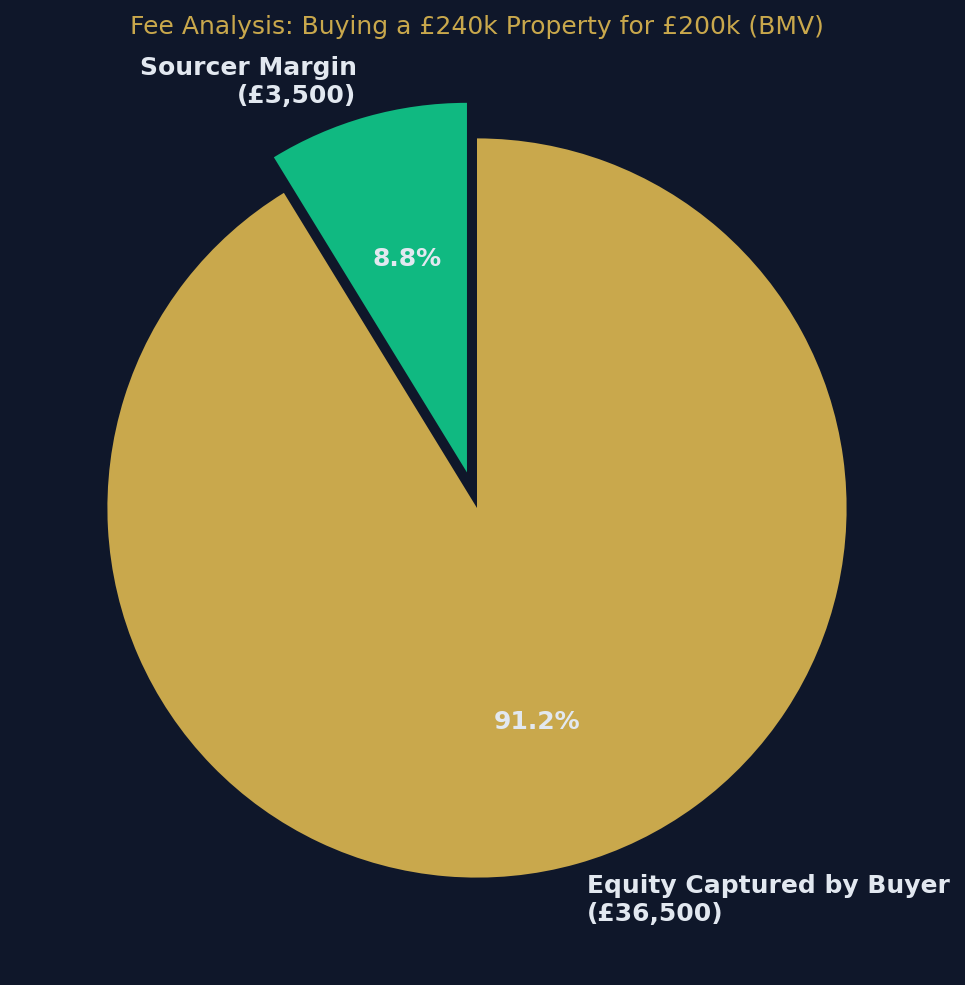
Conversely, if a sourcer charges £3,500 to find a property at fair market value merely because it produces an 8% yield, you are functionally paying a premium just for convenience. This is when standard buying agents or independent retail hunting is generally more viable.
The Protective Payment Schedule
Never, under any circumstances, pay 100% of property sourcing fees UK upfront. Legitimate sourcing professionals utilize a phased payment schedule to tie their compensation to successful execution.
The Golden Standard Split:
- 50% Reservation Fee (Non-Refundable with conditions): Paid when you sign the exclusivity agreement. Crucially, this must be held in a client-protected escrow account or be subject to Redress Scheme compliance.
- 50% Completion Fee: Paid only when the property exchanges contracts or on the day of legal completion.
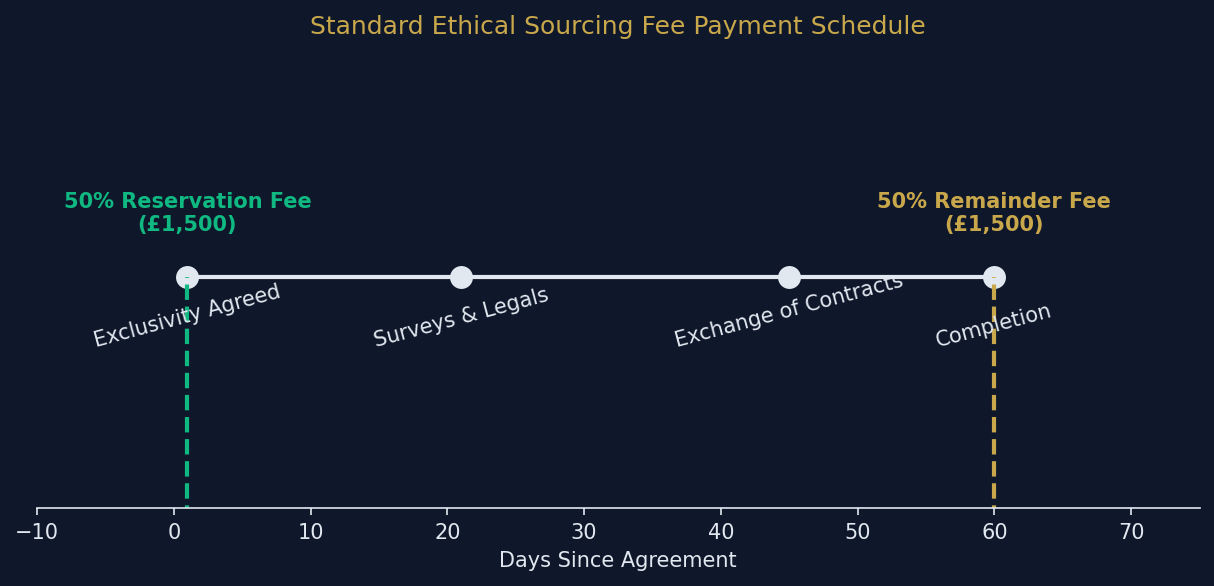
This structure ensures the sourcer remains financially motivated to resolve legal hurdles or down-valuations that inevitably arise during the survey period.
Final Verdict: Are Sourcing Fees Inflating?
Over the past five years, the baseline cost to utilize a deal sourcer has climbed. Inflationary pressure, rising compliance requirements (such as AML and ICO registrations), and skyrocketing digital marketing costs for lead generation have forced sourcers to raise their baseline matrices.
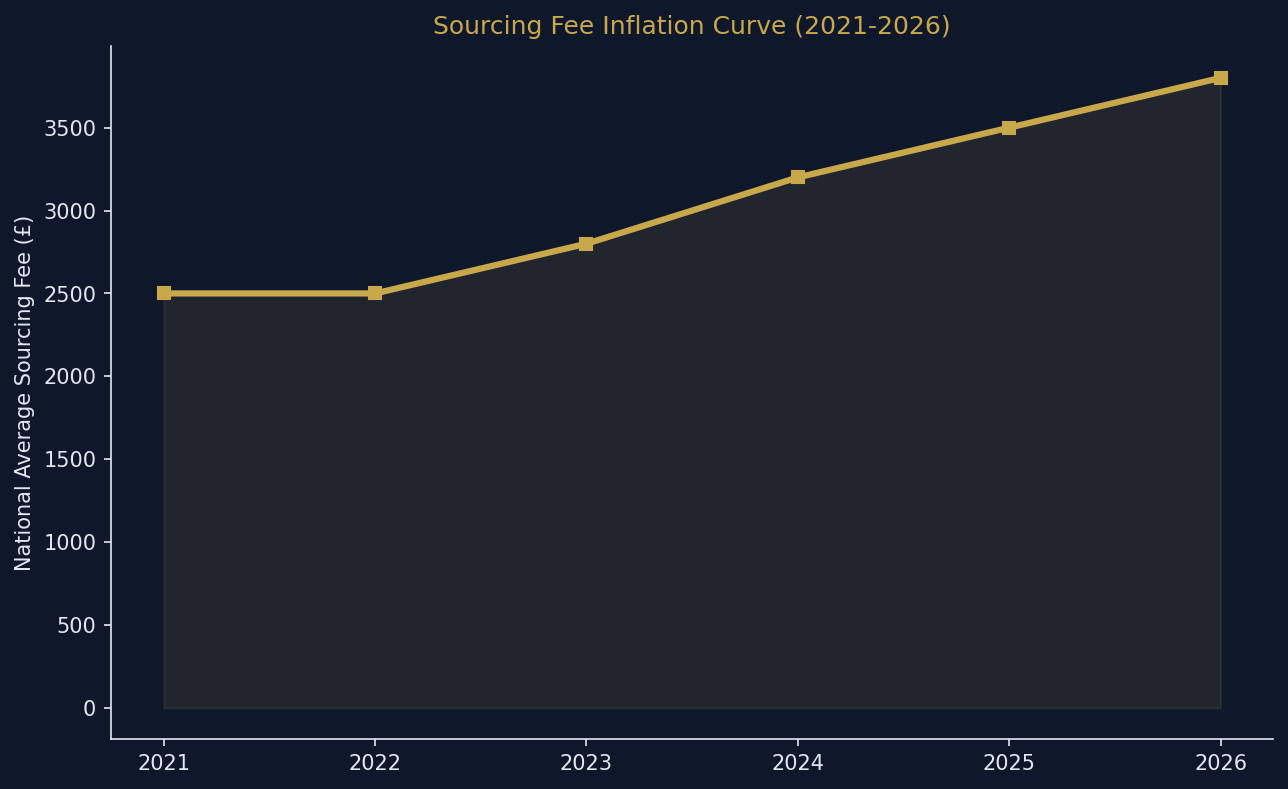
However, as long as retail property portals remain intensely competitive and institutional funds continue sweeping up volume, paying a structured, flat deal sourcing fee remains the most effective lever for a savvy property equity investor looking to scale a portfolio with legitimate, built-in margin.
By understanding the exact regional averages and avoiding the hidden backdoor kickbacks, you can reliably calculate exactly what a fair fee is—and decisively reject anything worse than it.
Stop being a landlord. Start being an investor.
Shaded Canvas introduces serious capital to vetted UK property opportunities — targeting 12–16% net returns.
Start Investing →