

Manchester continues to dominate the conversation for any investor looking to maximize returns in the UK property market. As we move deep into 2026, the city’s economic fundamentals, unprecedented population growth, and robust infrastructure upgrades are converging to create a uniquely lucrative environment for property investment. With capital appreciation forecasts consistently outpacing the national average and rental yields remaining fiercely competitive, purchasing an investment property in Manchester UK is widely considered a cornerstone strategy for both domestic and international investors.
This comprehensive guide dissects the 2026 Manchester property market. We will explore the latest data on rental yields across key postcodes, analyze capital growth projections, and identify the most promising neighborhoods. Furthermore, we will contextualize Manchester within the broader conversation of how to get into real estate UK, whether you are buying your first investment property UK or scaling a portfolio via real estate syndication UK structures.
1. The Macro-Economic Drivers: Why Manchester in 2026?
The foundation of any successful property investment lies in the underlying economic strength of the city. Manchester is currently experiencing an economic renaissance that fundamentally supports long-term property demand.
Exponential Economic and Population Growth
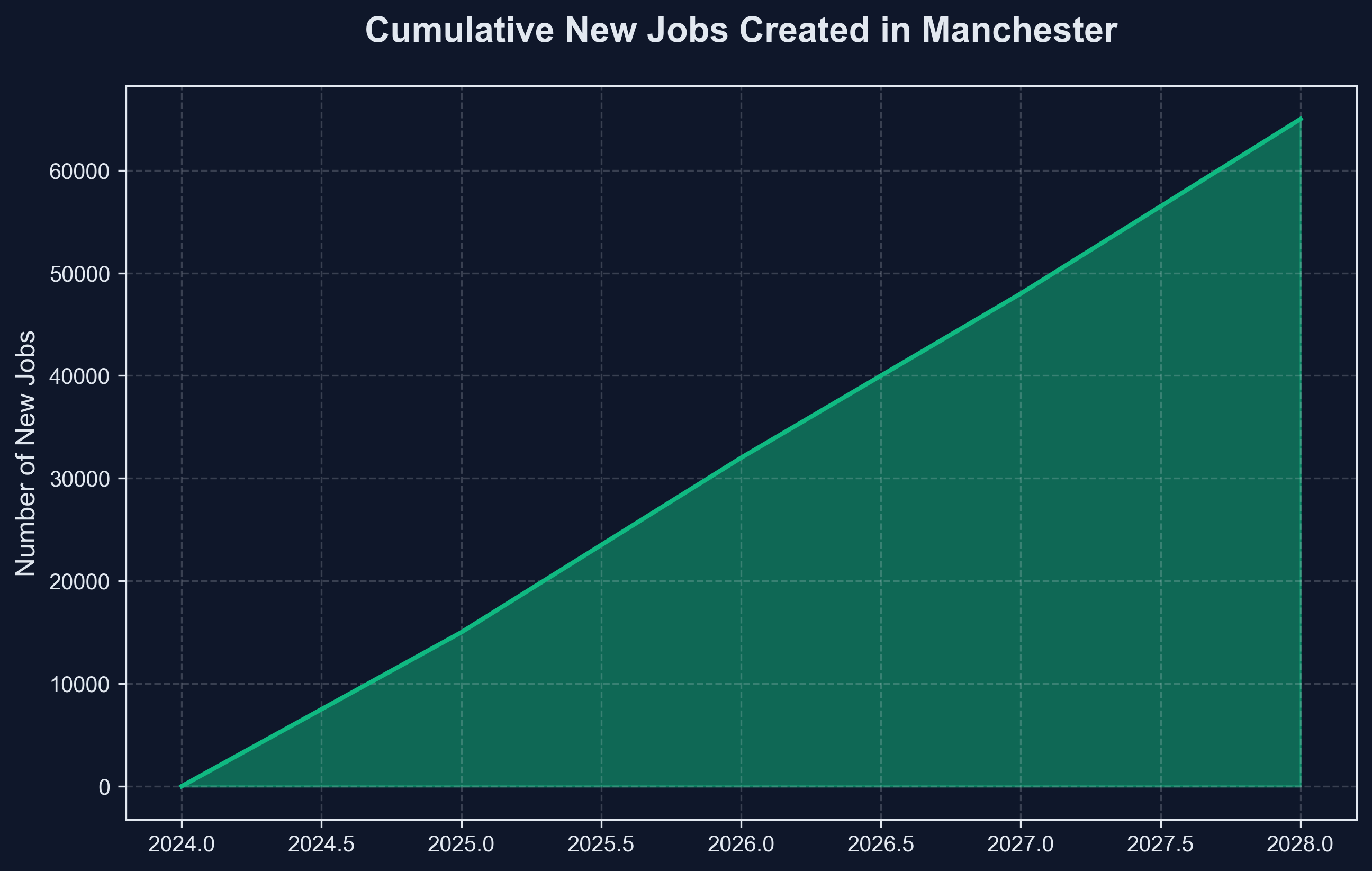
Manchester’s economy is projected to expand at an annual rate of 2.1% to 2.5% between 2025 and 2028. This growth rate is nearly double the UK national average, positioning the city as an economic powerhouse. Following this financial trajectory, the job market is anticipated to grow by 1.8% annually, generating approximately 65,000 new jobs over the next few years. This influx of employment opportunities acts as a magnet for young professionals and graduates.
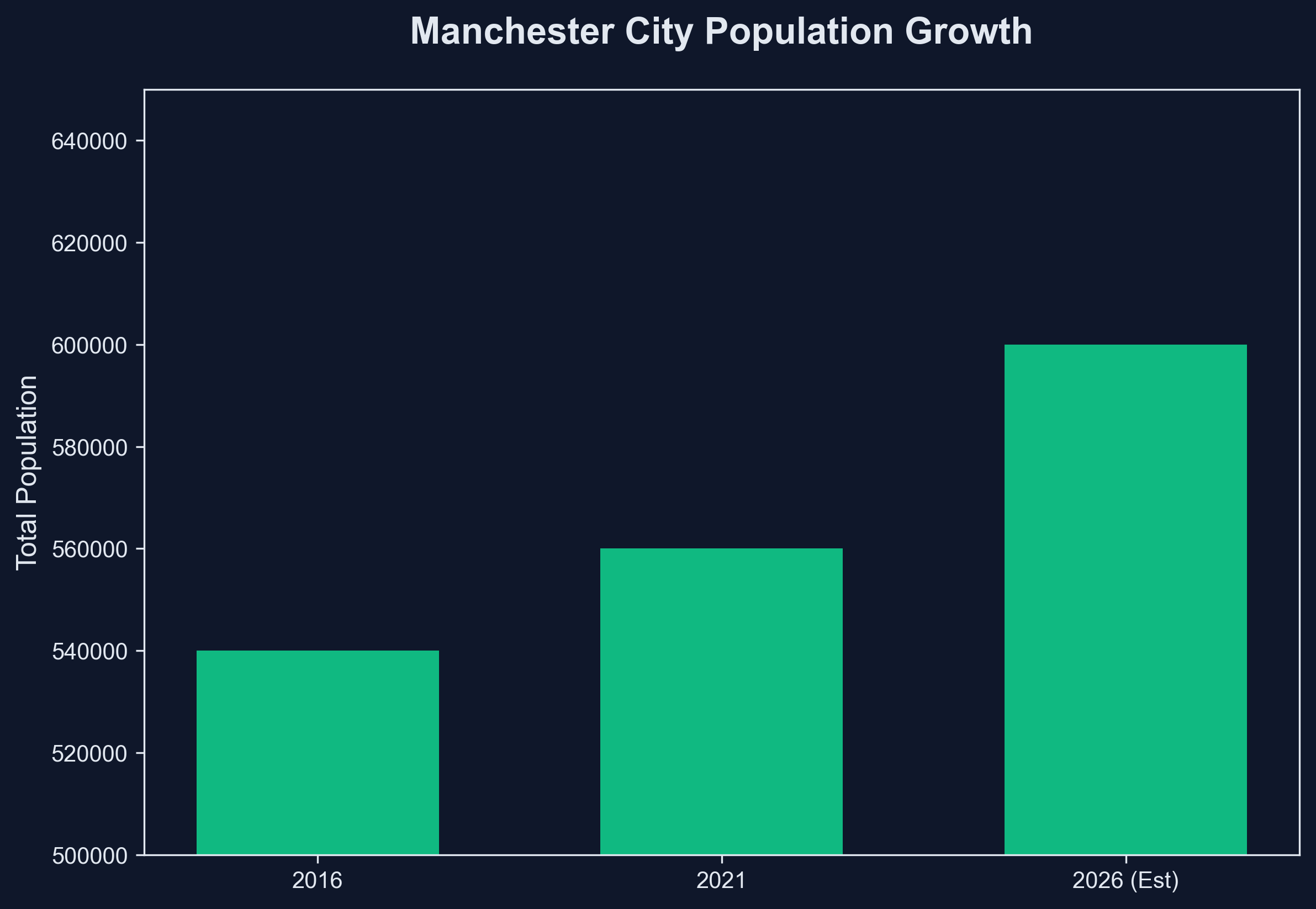
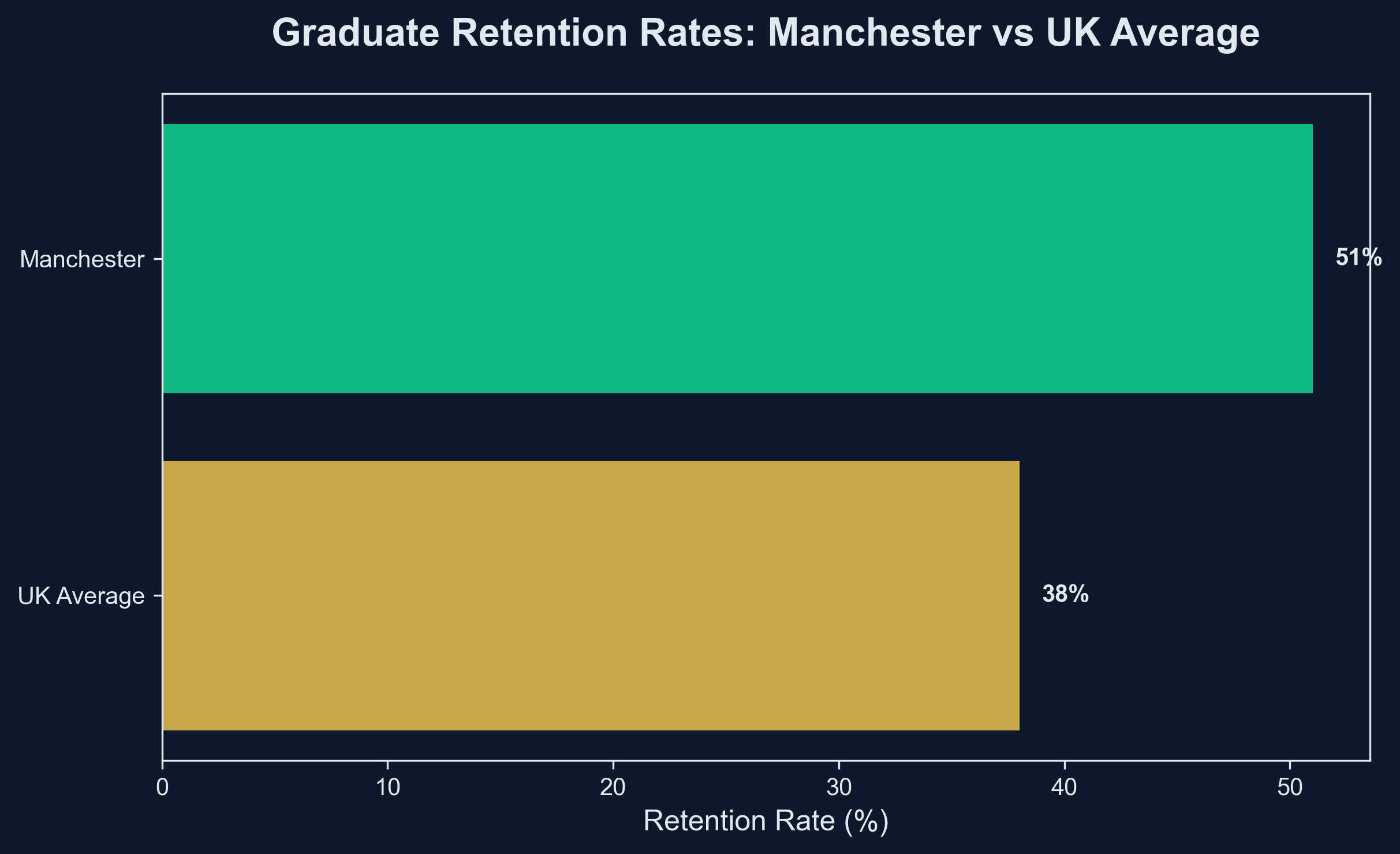
Simultaneously, the city's population is surging. Forecasts indicate Manchester's population will reach 600,000 residents in 2026, with an estimated 100,000 people living directly within the city limits. Notably, Manchester boasts an exceptionally high graduate retention rate; over 50% of the students who study at the city’s universities choose to remain after graduation. With a student population exceeding 80,000, this creates a constant, structural demand for high-quality rental accommodation.
Multi-Billion Pound Regeneration Projects
Urban regeneration is a proven catalyst for localized property price growth. Manchester is currently under transformation by several large-scale projects:
- Victoria North: A £4 billion joint venture aimed at creating 15,000 new homes across 155 hectares over the next 15 years.
- Mayfield: A £1.5 billion project delivering a mix of commercial space, residential units, and the city's first new public park in a century.
- St John’s: The new cultural and enterprise hub, home to the Aviva Studios and significant residential developments.
These projects not only improve the physical infrastructure but also attract major corporate tenants, driving up local wages and, consequently, the capacity for rental growth.
2. Market Trends and Price Forecasts for 2026 to 2029
Investors entering the market in 2026 are well-positioned to benefit from sustained capital appreciation. While the rapid, double-digit growth seen in the early 2020s has stabilized, Manchester remains one of the strongest performers in the UK.
Short-Term and Medium-Term Capital Appreciation
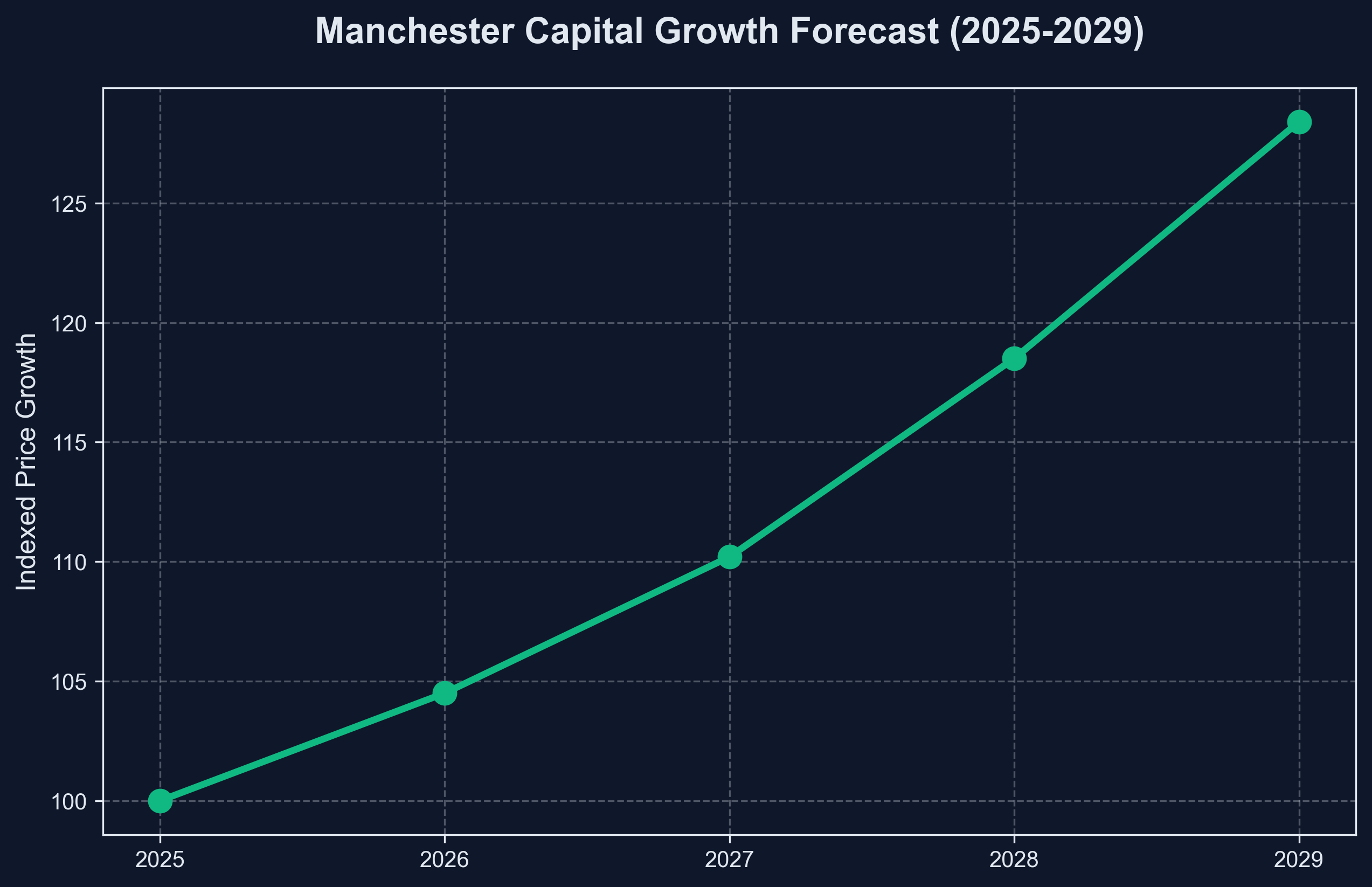
For 2026, property prices in Manchester are forecast to rise by approximately 3.5% to 5.0%. This growth is supported by a structural undersupply of housing against the backdrop of consistent, strong demand. Improving mortgage affordability in 2026, following the stabilization of Bank of England base rates, is further stimulating buyer activity.
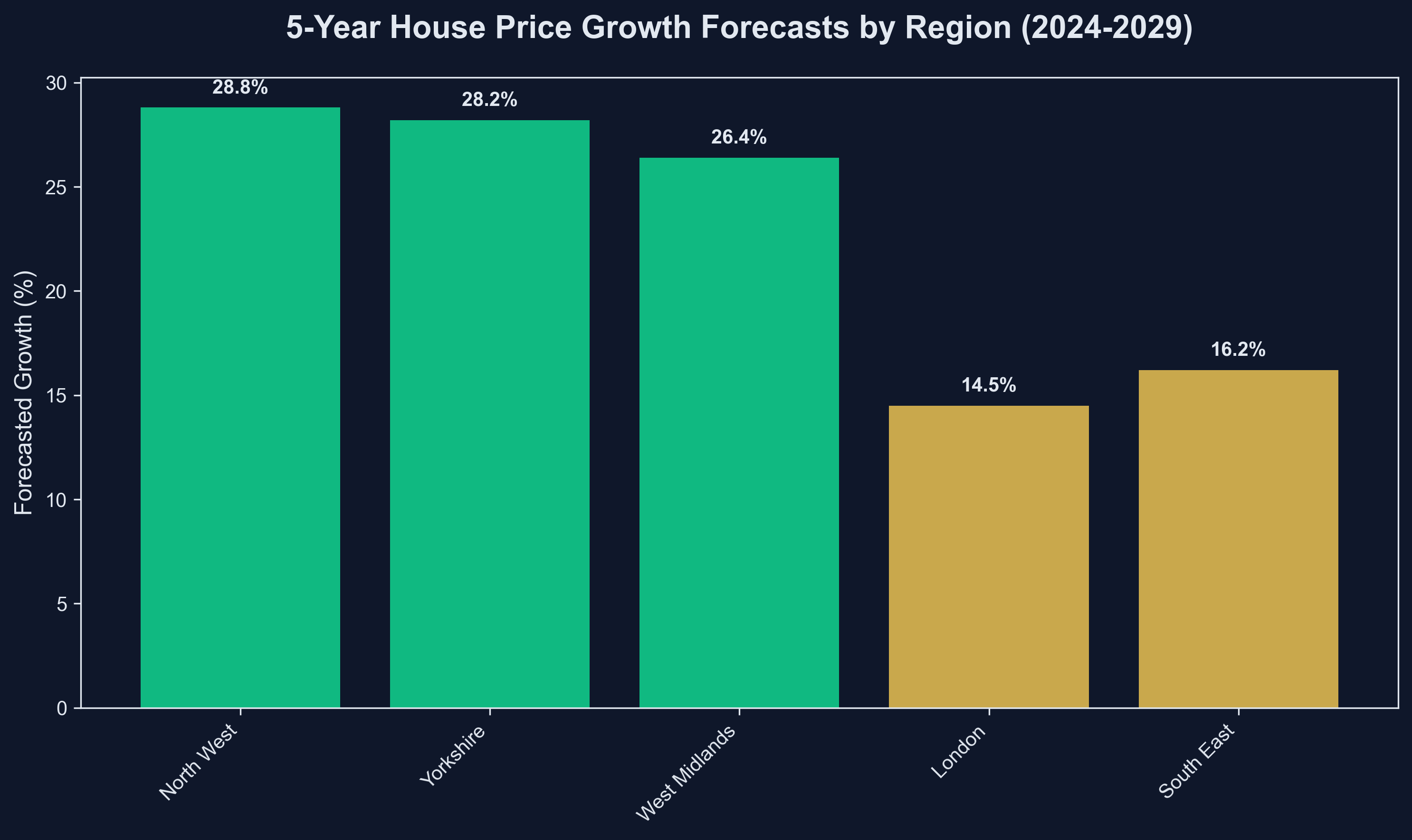
Looking at the medium-term, the outlook is even more robust. Leading property consultancies, including JLL and Savills, estimate that the North West region will experience cumulative capital growth of 28% to 29.4% by 2029. Manchester, as the region's primary economic engine, is expected to lead this charge, rivaled only by Birmingham in terms of sheer growth potential among major UK cities.
Affordability Relative to the South
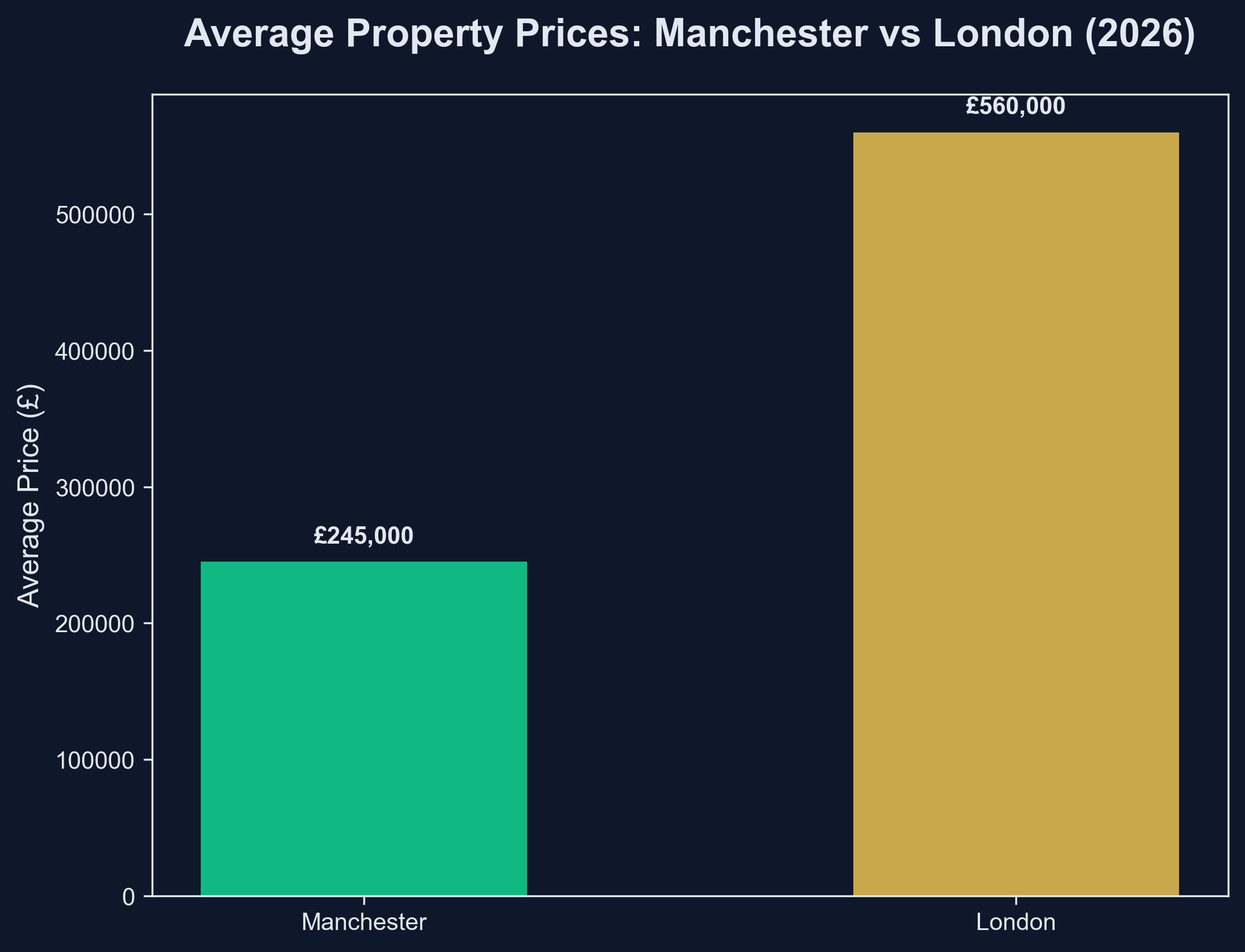
Despite the strong growth trajectory, Manchester offers a highly attractive entry point compared to London and the South East. As of 2026, the average property price in Manchester sits comfortably around £240,000 to £255,000. This stark contrast to London's average (frequently exceeding £550,000) allows investors to acquire higher-yielding assets without the prohibitive capital outlay required in the capital. For individuals looking into buying first investment property uk, Manchester provides a critical balance of affordability and high growth potential.
3. Rental Yields in Manchester: Maximizing ROI in 2026
Capital appreciation is only half the equation; immediate cash flow through rental yields is equally critical. Manchester continues to offer some of the most attractive gross rental yields in the UK.
Gross vs. Net Yields
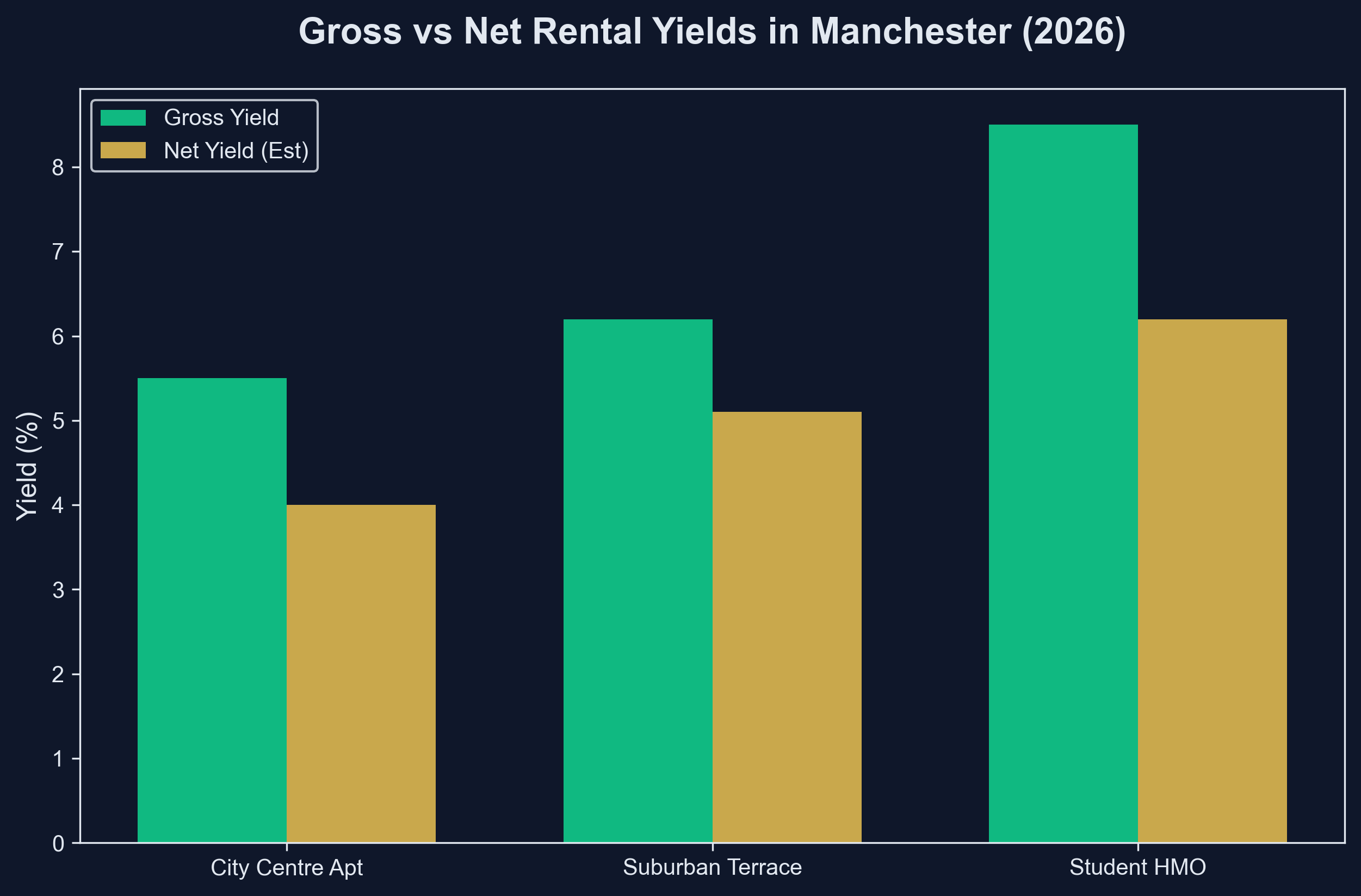
The average gross rental yield across Manchester currently stands at approximately 6.6%, significantly outperforming the national average of round 5.5%. When accounting for service charges, ground rents, management fees, and maintenance, the net yield typically averages around 4.3% to 4.8%.
High-Yield Property Types
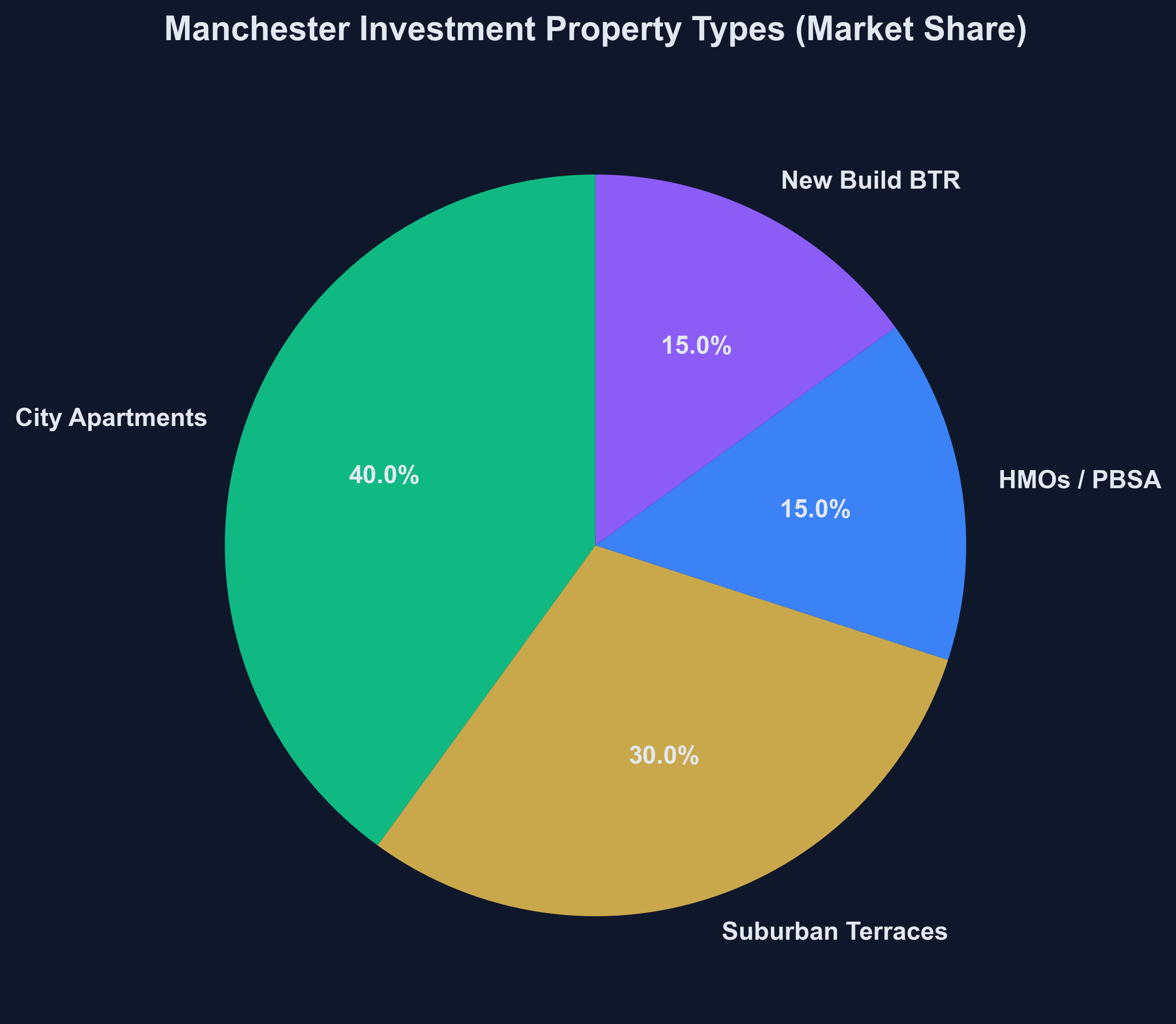
- Terraced Houses: Often considered the sweet spot for many traditional investors. They lack the high service charges associated with modern apartment blocks and appeal to a broad demographic, from young families to professional sharers.
- Studio and 1-Bedroom Apartments: These units, particularly in the city center or key regeneration zones, provide excellent entry points, often priced below £150,000, and can generate strong yields due to high demand from single professionals.
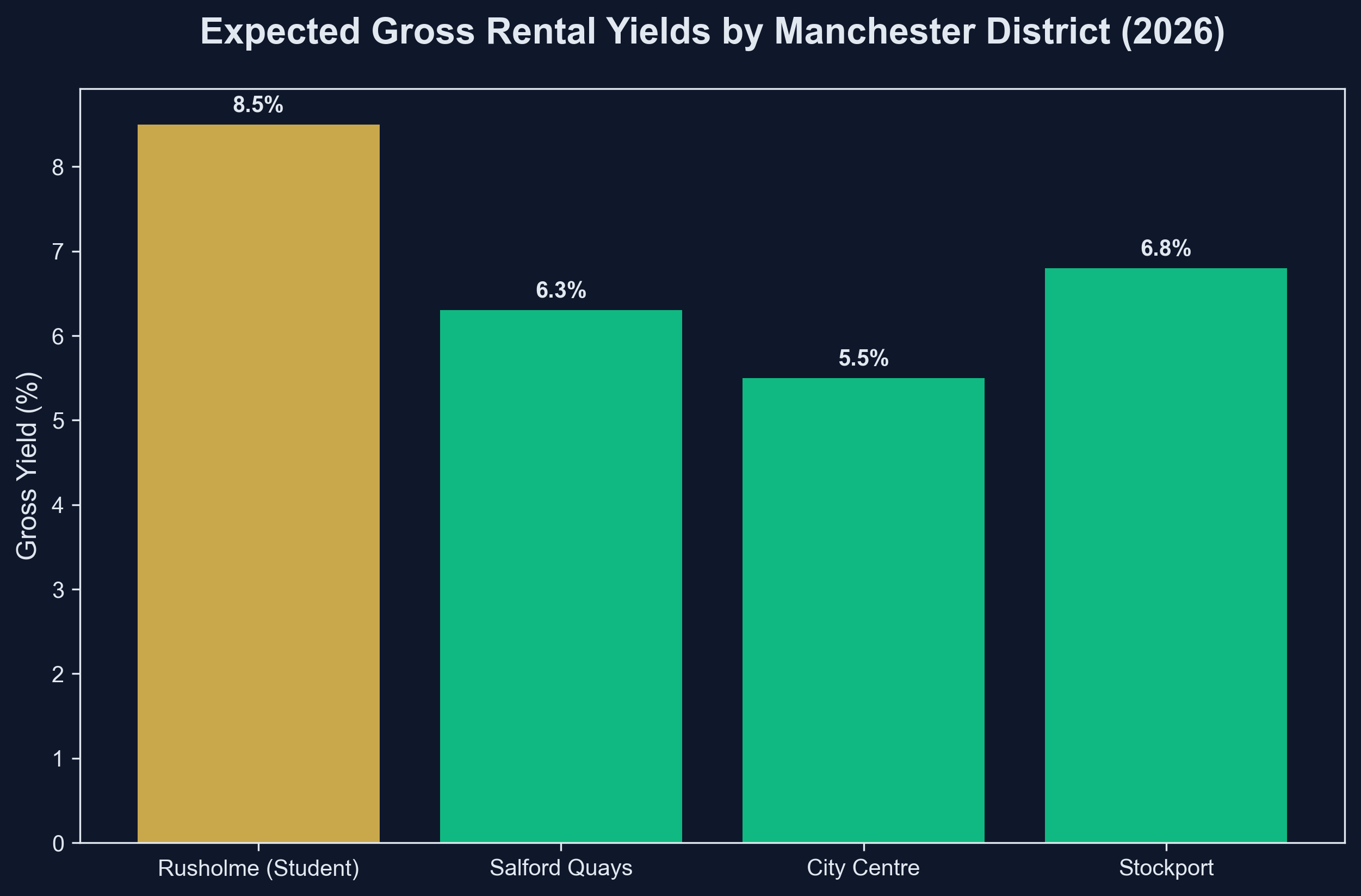
- Houses in Multiple Occupation (HMOs): While requiring more intensive management and strict regulatory compliance, HMOs in student-heavy areas can achieve gross yields exceeding 8% to 10%.
4. Deciding Where to Invest: Best Areas in Manchester
Selecting the right postcode is paramount. Manchester is not a monolith; different districts serve vastly different demographics and provide different return profiles.
Salford Quays and MediaCityUK (M5 / M50)
Salford Quays has evolved into a premier destination for young professionals, heavily driven by the presence of the BBC, ITV, and numerous tech firms at MediaCityUK. Properties here are predominantly modern, high-spec apartments. Investors can expect robust tenant demand, minimal void periods, and gross yields generally ranging from 6.0% to 6.5%. The tenant profile tends to be reliable, high-earning professionals.
The City Centre (M1 / M4 / M3)
The core city center—encompassing areas like Ancoats, the Northern Quarter, and Castlefield—offers the ultimate in urban living. Ancoats, frequently cited as one of the coolest neighborhoods globally, continues to see high demand. While capital entry prices are higher here (compressing gross yields slightly to around 5% to 6%), the capital preservation and potential for long-term appreciation are exceptionally strong. These areas attract high-paid corporate workers who prioritize proximity to amenities and nightlife.
Fallowfield and Rusholme (M14)
For investors focused purely on cash flow, the traditional student corridors of Fallowfield and Rusholme are unparalleled. Anchored by the massive University of Manchester and Manchester Metropolitan University student bodies, these areas are dominated by HMOs and purpose-built student accommodation (PBSA). Gross yields here can comfortably reach 8% to 9%. However, investors must factor in higher maintenance costs and the cyclical nature of student tenancies.
Emerging Hotspots: Stockport and Bolton
As the city core becomes more expensive, the outer boroughs connected by the Metrolink tram system are seeing a ripple effect. Stockport, currently undergoing a massive £1 billion regeneration of its town center, is becoming increasingly popular for young families and professionals priced out of the center. Yields here are highly competitive, and the potential for capital uplift as the regeneration completes is substantial.
5. Structuring Your Investment: From Solo Ventures to Syndication
Understanding how to structure your property purchase is just as important as selecting the asset. The landscape of property investment has evolved, offering various vehicles depending on your available capital and risk tolerance.
Buying Your First Investment Property UK
For those individuals taking their first steps, traditional buy-to-let (BTL) mortgages remain the primary route. In 2026, lenders stress-test mortgages at higher rates than the historically low period of the 2010s, meaning significant deposits (typically 25%) are required. However, the accessibility of the Manchester market means a £60,000 deposit can secure a prime asset. When buying first investment property uk, prioritizing areas with strong fundamentals (close to transport links, hospitals, or universities) is key to mitigating risk.
Institutional Influence: <a href="https://blog.shadedcanvas.co.uk/post/sli-uk-real-estate" style="color:#c9a84c;text-decoration:underline;font-weight:500">sli uk real estate and standard life investments uk real estate
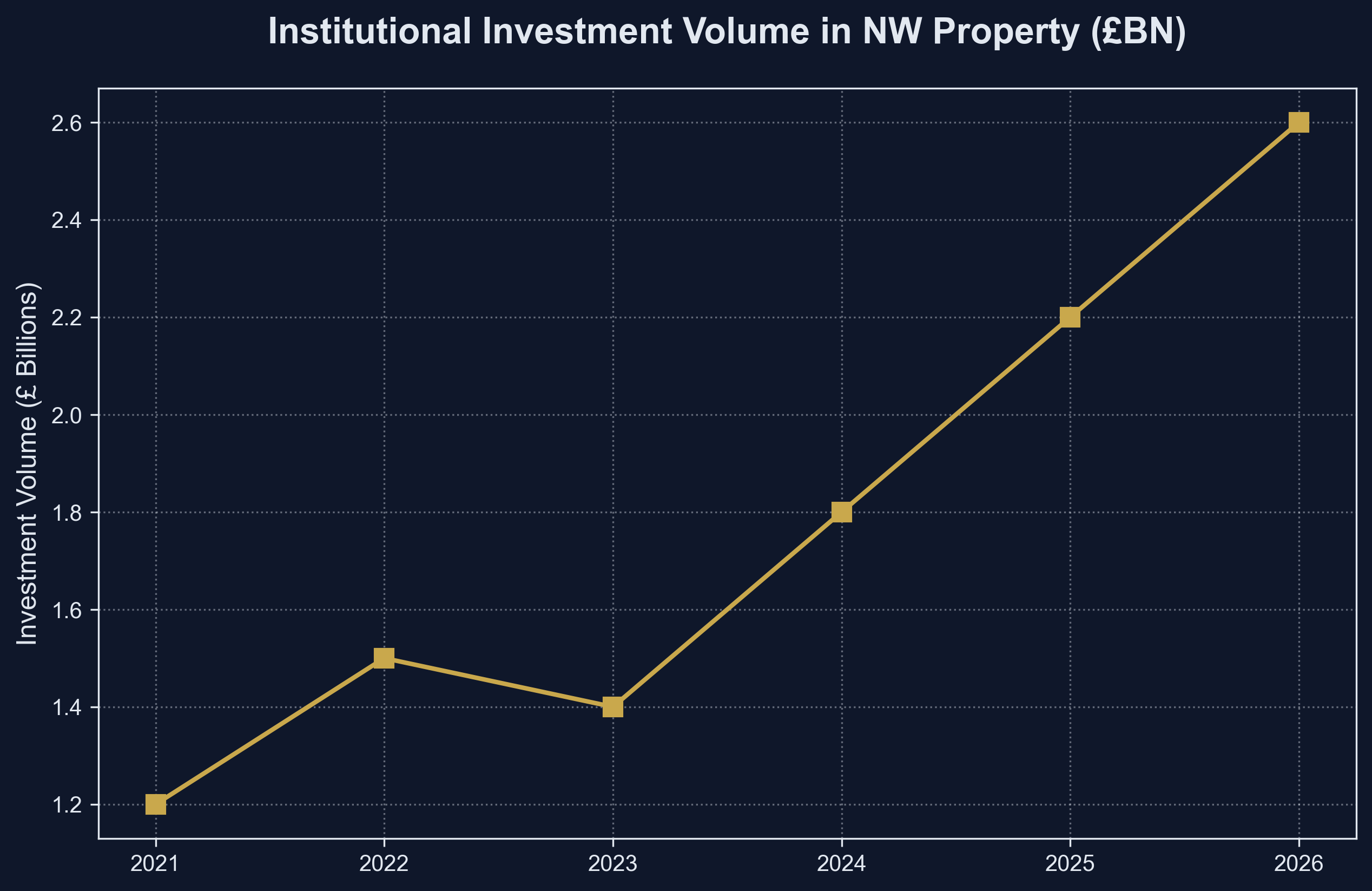
The UK market is increasingly shaped by institutional capital. Entities formally operating under banners like sli uk real estate (Standard Life Investments prior to restructuring and rebranding under abrdn) have long recognized the immense value in regional cities like Manchester. These institutional investors typically focus on large-scale Build-to-Rent (BTR) developments, providing high-quality, amenity-rich living spaces. Their presence validates the market's long-term stability and inadvertently drives up the standards expected by modern tenants, forcing smaller private landlords to maintain high property conditions.
Scaling with Real Estate Syndication UK
For investors looking to deploy capital without the operational headache of direct management, or those seeking exposure to larger commercial or multi-unit residential projects, real estate syndication uk is gaining significant traction. A syndicate pools capital from multiple investors to purchase assets that would be too expensive for a single individual. This structure allows investors to own a fractional share of a high-yielding Manchester apartment block or commercial space, providing passive income and a share of the capital appreciation upon sale.
Real Estate Venture Capital UK
On the cutting edge of the market, real estate venture capital uk firms are increasingly active in the North West. These firms don't just buy static assets; they invest in the PropTech (Property Technology) companies that are disrupting the market—from AI-driven property management platforms to innovative construction technologies like modular housing. Many of these startups are based in Manchester's thriving tech scene, creating a symbiotic ecosystem where property investment and technological innovation fuel each other.
6. Sourcing and Management: Navigating the Market
The mechanics of acquiring and operating an investment property in Manchester require coordination with reliable local partners.
The Role of UK Investment Property Services London
Interestingly, a large volume of capital flowing into Manchester originates from the South East and internationally. Consequently, many investors rely on uk investment property services london to act as their bridge. These specialized agencies and wealth managers offer end-to-end services: sourcing off-market Manchester properties, arranging financing, and appointing local letting agents. While they charge a premium, their ability to conduct due diligence and navigate the localized nuances of the Manchester market from a distance is invaluable for absentee landlords.
Property Management Best Practices
Whether you use a sourcing agent or acquire the property directly, strict property management is essential to realizing the projected 6.6% yields.
- Proactive Maintenance: Manchester's rental market is competitive; tenants expect fast resolutions to maintenance issues. Implement a system for rapid response to avoid costly void periods.
- Regulatory Compliance: The UK government continues to tighten regulations regarding energy efficiency (EPC ratings) and tenant rights. Ensure any property purchased in 2026 meets the latest EPC requirements to avoid substantial retrofitting costs later.
- Tenant Referencing: Use robust referencing agencies to secure reliable tenants, particularly in non-student areas.
7. The Future Trajectory of Manchester Property
Looking toward the end of the decade, Manchester is not showing signs of deceleration. The city's masterplan, which focuses on sustainable urban development, improved public transport infrastructure (including the continued expansion of the Metrolink and the integration of the Bee Network), and carbon-neutral targets, positions it as a future-proofed environment.
The continued influx of multinational corporations relocating their headquarters from London to Manchester guarantees a steady stream of highly skilled professionals requiring housing. As long as economic expansion outpaces the delivery of new housing units, the fundamental laws of supply and demand dictate that both capital values and rental prices will remain on an upward trajectory. For proactive investors, securing high-quality assets in strategic Manchester postcodes in 2026 represents a highly resilient, income-generating tactic designed to build generational wealth.
Stop being a landlord. Start being an investor.
Shaded Canvas introduces serious capital to vetted UK property opportunities — targeting 12–16% net returns.
Start Investing →