

The UK property market is currently undergoing a massive structural shift. With institutional capital pouring into the Private Rented Sector (PRS), Section 24 taxing amateur landlords out of the game, and the Renters' Rights Act shaking up compliance, a massive void has opened up.
Cash-rich but time-poor investors are scrambling to find high-yield, compliant property deals.
This is where the professional property sourcer steps in.
If you’re looking to build a lucrative career in UK real estate, property sourcing is arguably the fastest way to get started without needing massive capital. But ignore the YouTube gurus promising "get rich quick with no money down." The reality of how to become a property sourcer in the UK involves rigorous compliance, relentless networking, and a deep understanding of market fundamentals.
In this definitive 2026 guide, we'll break down exactly how to start a property sourcing business from scratch. We’ll show you the true startup costs (under £1,500), the non-negotiable legal requirements, and how to actually find property deals that investors will happily pay £3,000 to £5,000 for.
What Does a Property Sourcer Actually Do?
Before calculating your potential income or drafting a property sourcing business plan, you must understand the core function of the role.
A property sourcer acts as the vital bridge between a highly motivated seller (or an off-market opportunity) and a capitalized investor who lacks the time, local knowledge, or network to find the deal themselves.
The day-to-day role involves:
- Origination: Finding properties Below Market Value (BMV), high-yield HMOs, or unoptimized assets, usually before they hit Rightmove.
- Analysis: Running comprehensive financial models, calculating Gross Yield, Return on Capital Employed (ROCE), and refurbishment costs.
- Packaging: Creating a professional due diligence "deal pack" with floor plans, scope of works, and comparables.
- Matching: Selling the deal package to a vetted investor on your books.
- Progression (Optional but lucrative): Project managing the refurbishment and handing it over to a letting agent.
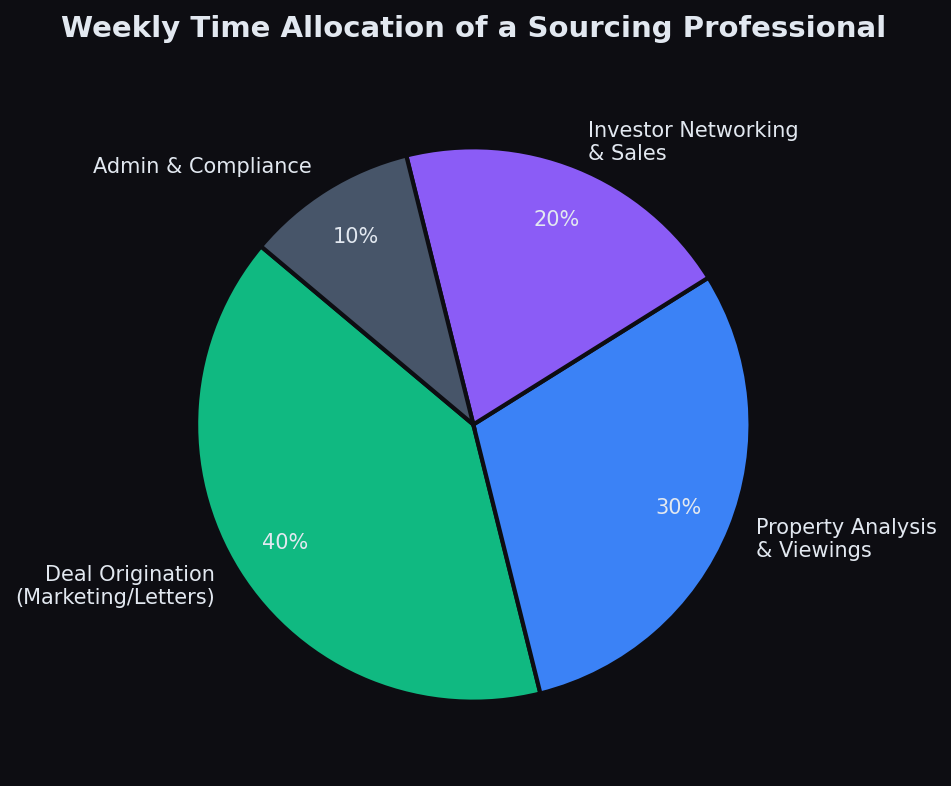
You are effectively a high-level consultant. Your fee is not a "finder's fee"—it is compensation for your specialized local knowledge, your deep network, and the time you save the investor.
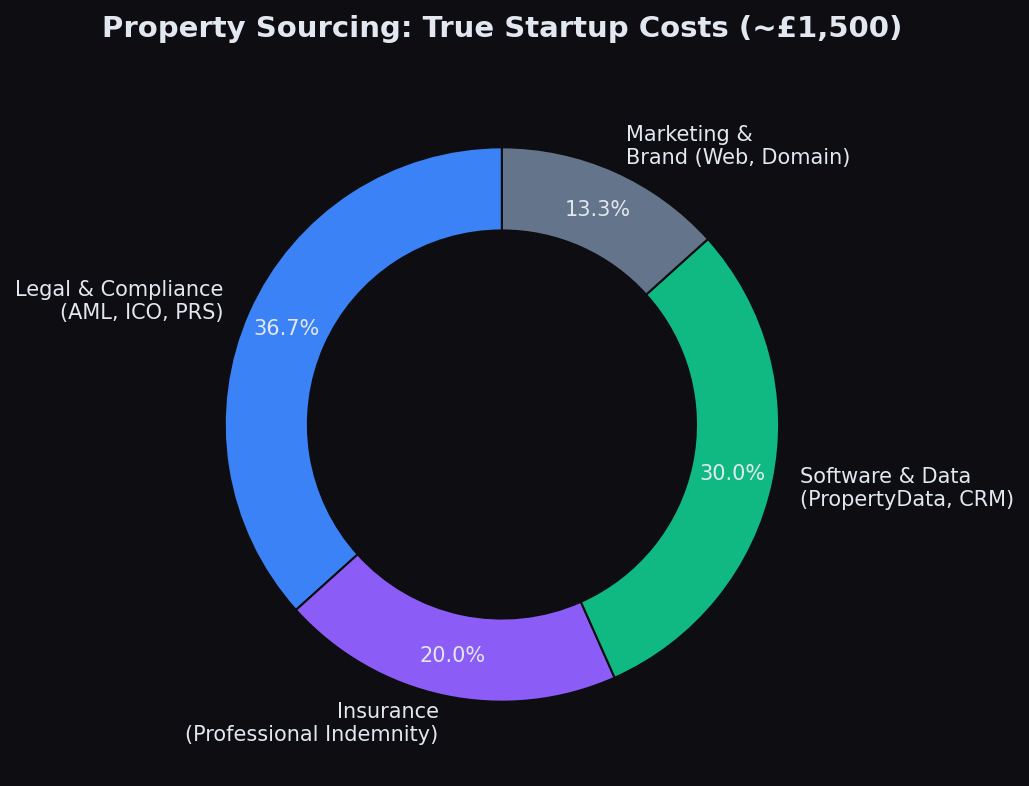
The True Startup Costs of a Property Sourcing Business
One of the biggest misconceptions in the industry, often peddled by £5,000 weekend courses, is that property sourcing is entirely free to start. It is not.
While the barrier to entry is radically lower than buying a property yourself, operating legally as a sourcer in the UK requires specific licensing, insurance, and technological infrastructure.
If you want to avoid massive HMRC fines, you need to budget for the following setup costs.
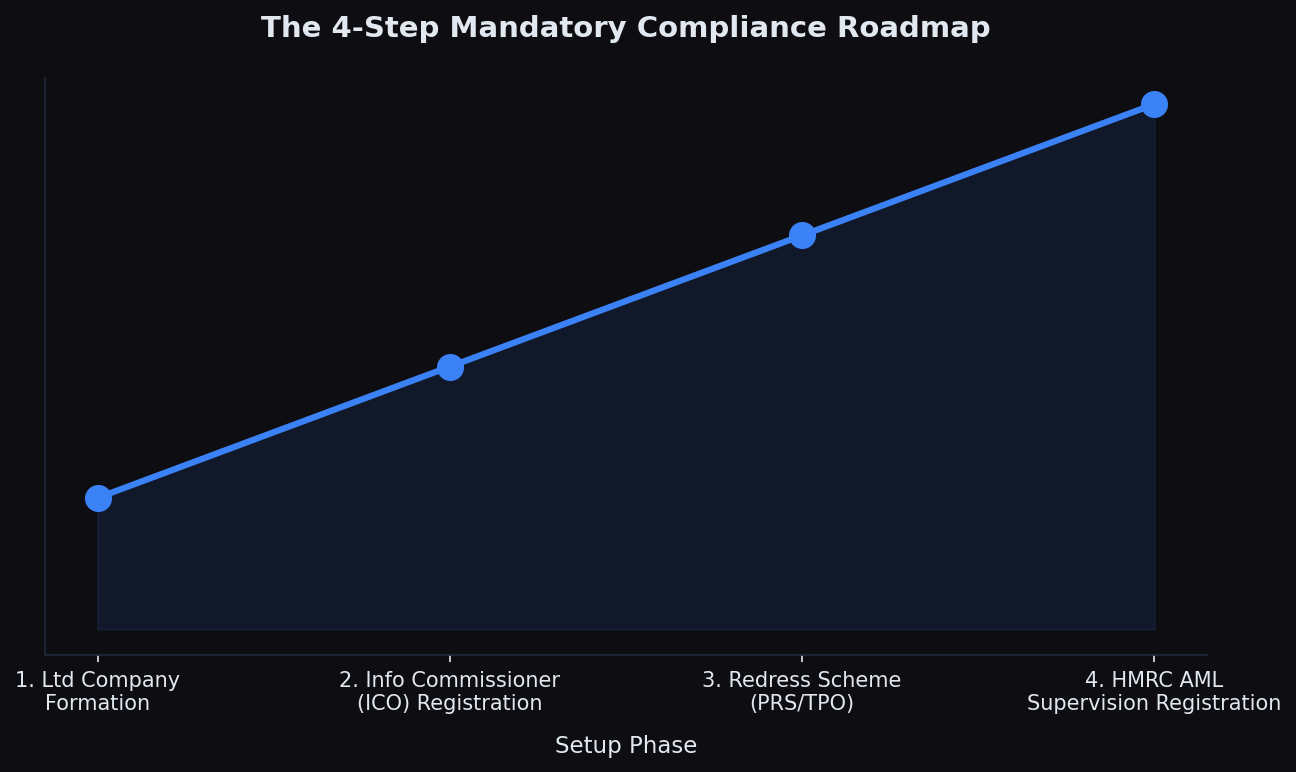
1. Legal and Compliance Costs
Property sourcers are legally classified as estate agents under the Estate Agents Act 1979. This means you must comply with strict Anti-Money Laundering (AML) regulations and consumer protection laws.
- Information Commissioner's Office (ICO): To legally process and store client data (investor passports, proof of funds), you must register with the ICO. Cost: £35-£40/year.
- Property Redress Scheme (PRS) or The Property Ombudsman (TPO): Membership in a government-approved redress scheme is a legal requirement. It gives investors an independent dispute resolution service if things go wrong. Cost: ~£200/year.
- Professional Indemnity Insurance (PI): This protects you if you make a mistake in your deal analysis and an investor sues you for financial loss. Most redress schemes require a minimum of £100,000 to £250,000 coverage. Cost: ~£250-£400/year.
- HMRC Anti-Money Laundering (AML) Registration: You are legally required to register your business with HMRC for AML supervision. This is non-negotiable. Cost: £300 application fee + £300 annual fee.
- NAPSA Membership (Optional but highly recommended): The National Association of Professional Sourcing Agents provides credibility, training, and standardized legal contracts. Cost: ~£199/year.
2. Operational and Tech Costs
To appear professional and operate efficiently, you need basic business infrastructure.
- Limited Company Registration: Setting up a dedicated Ltd company via Companies House. Cost: £12 - £50.
- Domain, Custom Email & Website: Do not email investors from a Gmail account. Use a custom domain, Google Workspace, and a basic landing page built on Webflow or Carrd. Cost: ~£150/year.
- Property Data Software: To find deals, assess comparables, and check land registry data efficiently, tools like PropertyData, Nimbus Maps, or LandInsight are essential. Cost: £200 - £600/year.
- CRM System: To manage your investor list and track conversations (e.g., HubSpot free tier or Pipedrive). Cost: £0 - £150/year.
Total Startup Capital Required
In total, you should expect to spend between £1,000 and £1,500 to set up a fully compliant, professional property sourcing business in the UK.
Compared to the multi-thousand-pound capital requirements for a standard buy-to-let or a commercial venture, this is arguably the most asymmetric risk-to-reward ratio in the real estate sector. If you are exploring lucrative side ventures, it parallels the high upside of the drop-servicing model or other high-leverage no-skills side hustles.
The 5-Step Roadmap to Becoming a Property Sourcer
Once your legal foundation is laid, the real work begins. To build a sustainable, 6-figure sourcing business, you need a systematic approach.
Step 1: Define Your Patch and Strategy
Do not try to source deals across the entire UK. Investors pay you for hyper-local expertise. Choose an investment zone (your "patch") that you know intimately. This should encompass roughly a 10-15 mile radius.
Furthermore, specialize in one specific strategy initially. Will you source:
- High-volume, low-margin vanilla Buy-to-Lets in the North East?
- High-margin, complex HMOs (Houses in Multiple Occupation) in university cities?
- BRRRR (Buy, Refurbish, Rent, Refinance, Retain) projects requiring extensive building work?
- Commercial to Residential conversions?
By becoming the recognized expert in a specific geographic and strategic niche, you naturally attract the subset of investors seeking exactly that profile.
Step 2: Build the "Power Team"
A top-tier property sourcer doesn't just hand over a post code and vanish; they provide a "turnkey" solution. To do this, you need a reliable network of highly competent professionals backing you up.
Your power team must include:
- Mortgage Broker: Specialized in commercial and investment finance to pre-approve your investors.
- Specialist Solicitor: A conveyancer who understands investor legalities (e.g., bridging finance, assignment contracts).
- Builder/Contractor: A reliable trades team to quote accurately on refurbishment costs (the "Scope of Works").
- Letting Agent: To provide accurate, realistic rental valuations (GDV) once the project is finished.
When you can tell an investor: "Here is the deal, here is the exact refurb cost from my vetted builder, and here is a letter from my letting agent confirming the end rent," you eliminate their risk and easily justify a £4,000 sourcing fee.
Step 3: Implement Relentless Deal Generation Strategies
The lifeblood of your sourcing business is a consistent funnel of properties. Relying purely on browsing Rightmove will severely limit your income. To find genuine BMV (Below Market Value) deals or high-yield opportunities, you must build robust origination channels.
Top Deal Sourcing Strategies:
- Direct to Vendor (D2V) Marketing: Sending highly targeted letter campaigns to landlords with EPC-failed properties, distressed assets, or multiple properties in a targeted postcode.
- Estate Agent Relationship Building: Becoming the "go-to" cash buyer for local agents. When a sale falls through at the last minute and the agent needs a rapid transaction to secure their commission, they should call you first. You must prove you have real investors backed by proof of funds.
- Auction Houses: Monitoring pre-auction and unsold post-auction lots for motivated sellers.
- Probate and Empty Homes Officers: Networking with local councils and solicitors looking to liquidate assets quickly.
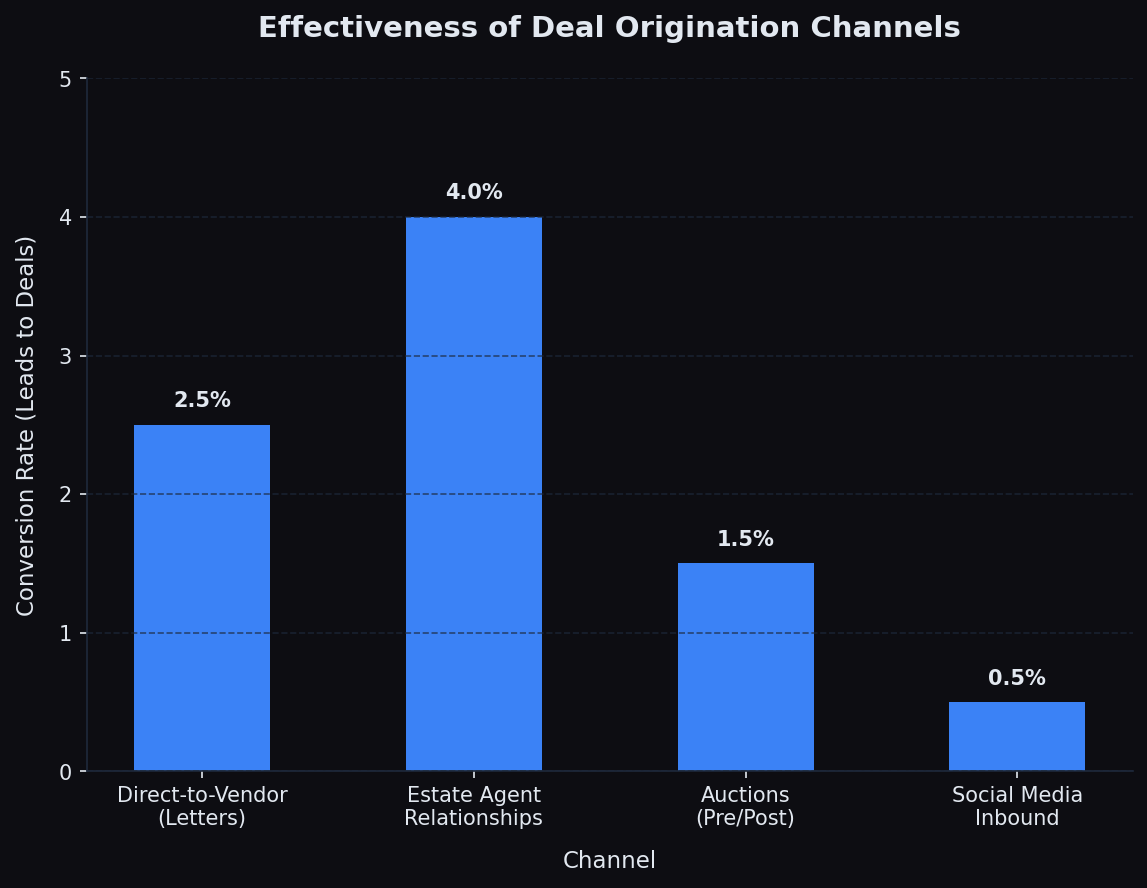
Generating consistent off-market property deals separates the amateurs from the professionals.
Step 4: Master Deal Analysis and Packaging

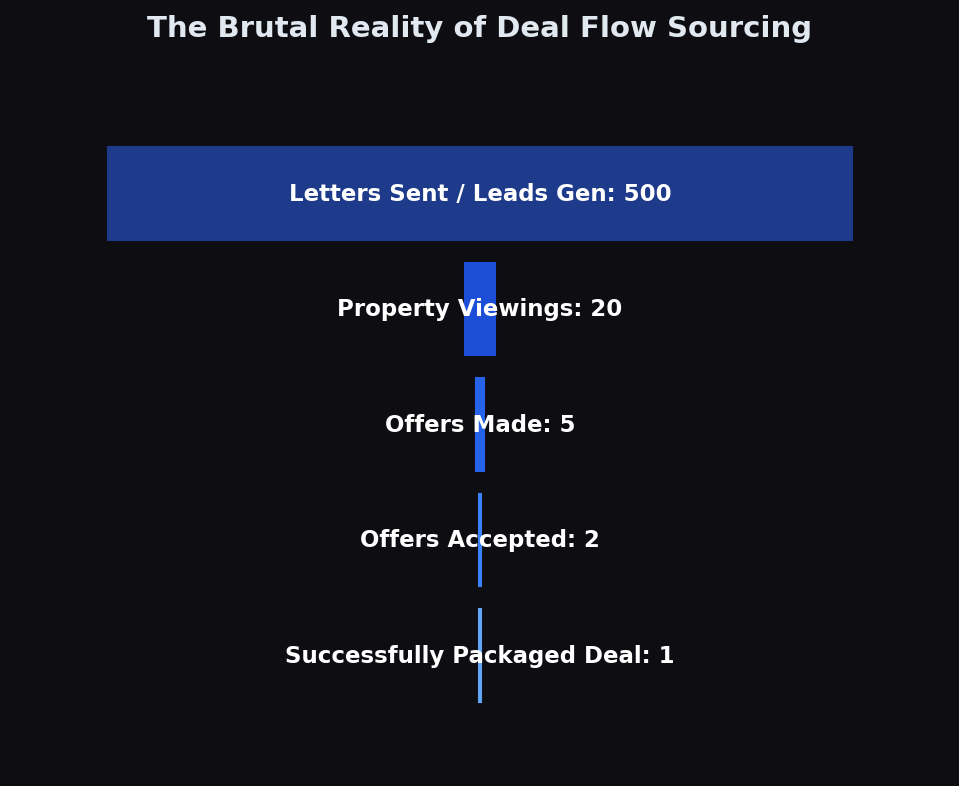
You will review 100 properties, view 20, make offers on 5, and successfully package just 1. This is a numbers game governed by strict financial modeling.
The Deal Pack: When presenting a deal to an investor, your "Deal Pack" must be a flawless, professional document. It should include:
- Executive Summary: The headline figures (Purchase Price, Refurb Cost, Sourcing Fee, GDV, Gross Yield, ROCE).
- Area Analysis: Demographics, local demand (e.g., proximity to hospitals, transport links), and regeneration plans.
- Financial Breakdown: A granular spreadsheet detailing every single cost (Stamp Duty, legal fees, holding costs, contingency funds).
- Comparables: At least 3 sold comparables (within 0.25 miles, sold in the last 6 months) to justify the GDV, and 3 rental comparables to justify the monthly income.
- Scope of Works: A breakdown of the required refurbishment, ideally backed by a quote from your contractor.
Never manipulate the numbers to make a bad deal look good. If your refurb estimate is £5k too low, the investor will lose money, you will lose a repeat client, and your reputation in the tight-knit property community will evaporate.
Step 5: Build a Vetted Investor List
Finding an incredible deal is useless if you don't have a buyer. Building an investor list is a continuous parallel activity.
Where to find property investors:
- Property Networking Events: Attend PIN (Property Investors Network), Progressive Property events, and independent local meetups. Don't be "salesy"—focus on demonstrating your deep local knowledge.
- Online Communities: Engage strategically on property forums, LinkedIn, and Facebook groups. Answer complex questions about your local area.
- Content Marketing: Publish highly detailed case studies of the local market on your own blog or newsletter.
Crucial Step: You must vet your investors. Have a formal onboarding process requiring them to sign a Non-Disclosure Agreement (NDA) and an introductory Terms of Business. Most importantly, demand Proof of Funds (POF). You cannot secure deals with estate agents using an investor who hasn't proven they hold the distinct capital.
The Property Sourcer Revenue Model
How much money can a property sourcer actually make? The property sourcer salary in the UK is highly variable, dictated entirely by transaction volume and margin quality.
Standard Sourcing Fees
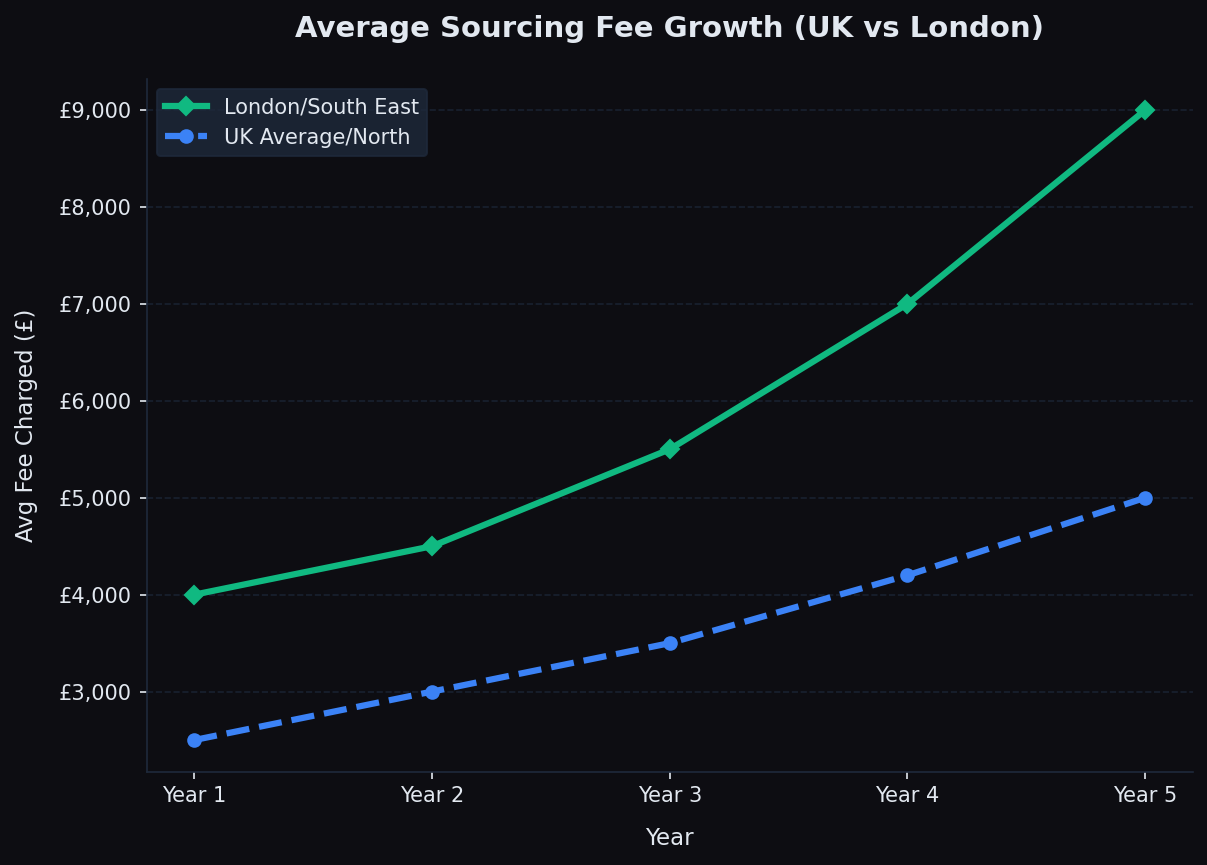
In 2026, standard property sourcing fees typically run between £3,000 and £5,000 per successful deal for a standard buy-to-let or small HMO. For highly complex commercial conversions or larger multi-unit blocks, fees are often negotiated as a percentage of the purchase price (e.g., 2% to 3%), potentially resulting in £10,000+ per deal.
The Project Management Upsell
Top-tier sourcers significantly boost their revenue by offering end-to-end "armchair" investments. Once the property is sourced, they project manage the refurbishment for the investor.
Project management fees usually range from 10% to 15% of the total refurbishment spend. If a property requires a £40,000 upgrade to become an HMO, the sourcer earns an additional £4,000 to £6,000.
Revenue Projections
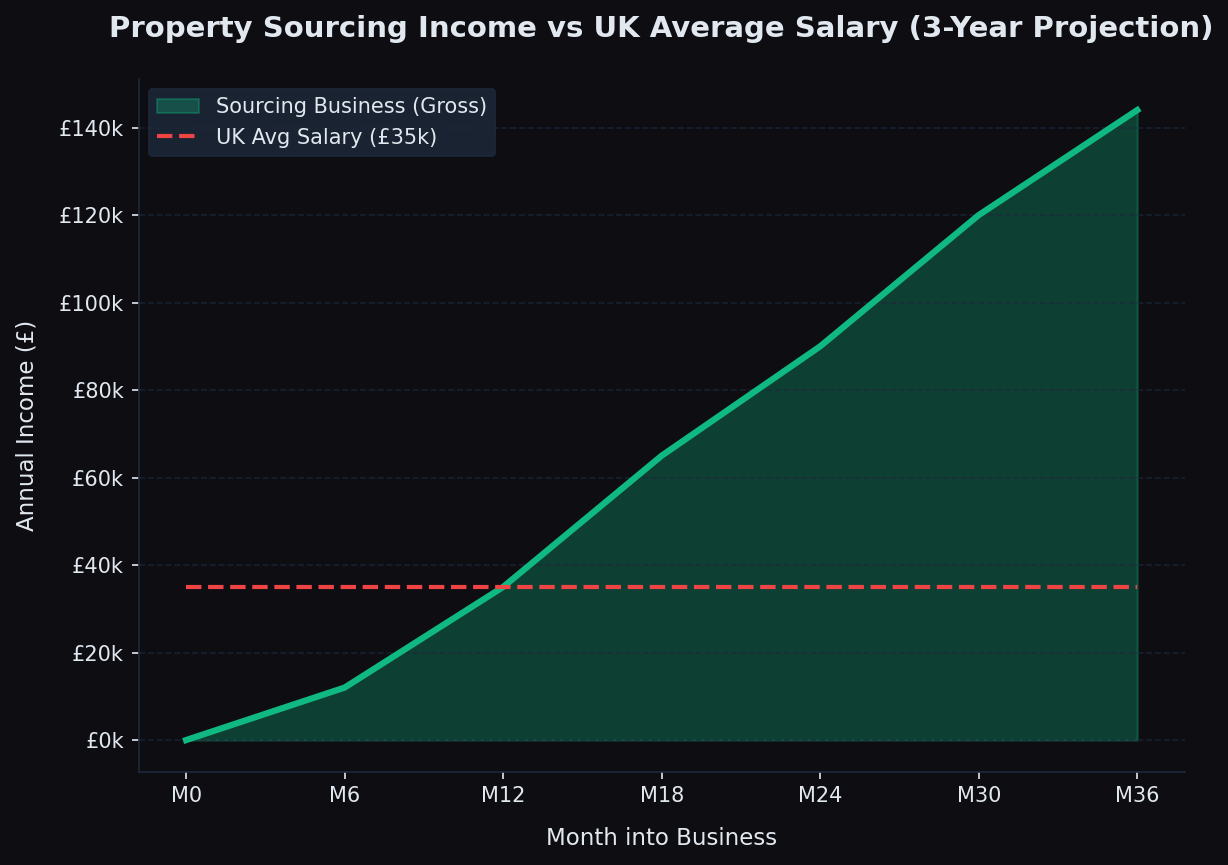
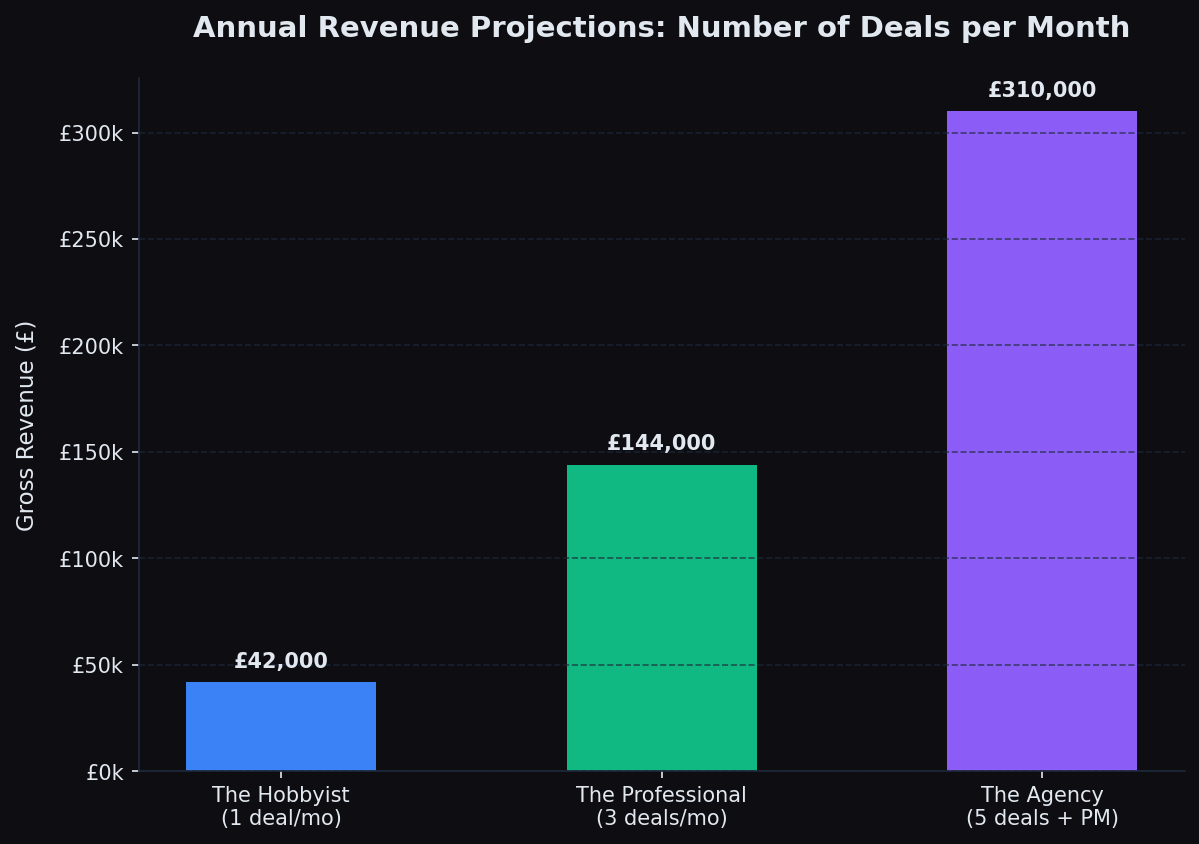
- The Hobbyist (1 deal per month): Sourcing 1 standard deal per month at £3,500 generates £42,000 gross annual revenue.
- The Professional (3 deals per month): Securing 3 solid deals a month at £4,000 generates £144,000 gross annual revenue.
- The Agency (5 deals + Project Management): A scaled sourcing agency with a dedicated origination team and project management wing can easily push past £300,000+ annually. This parallels the rapid scaling seen in specialized B2B service sectors and high-leverage property equity investing.
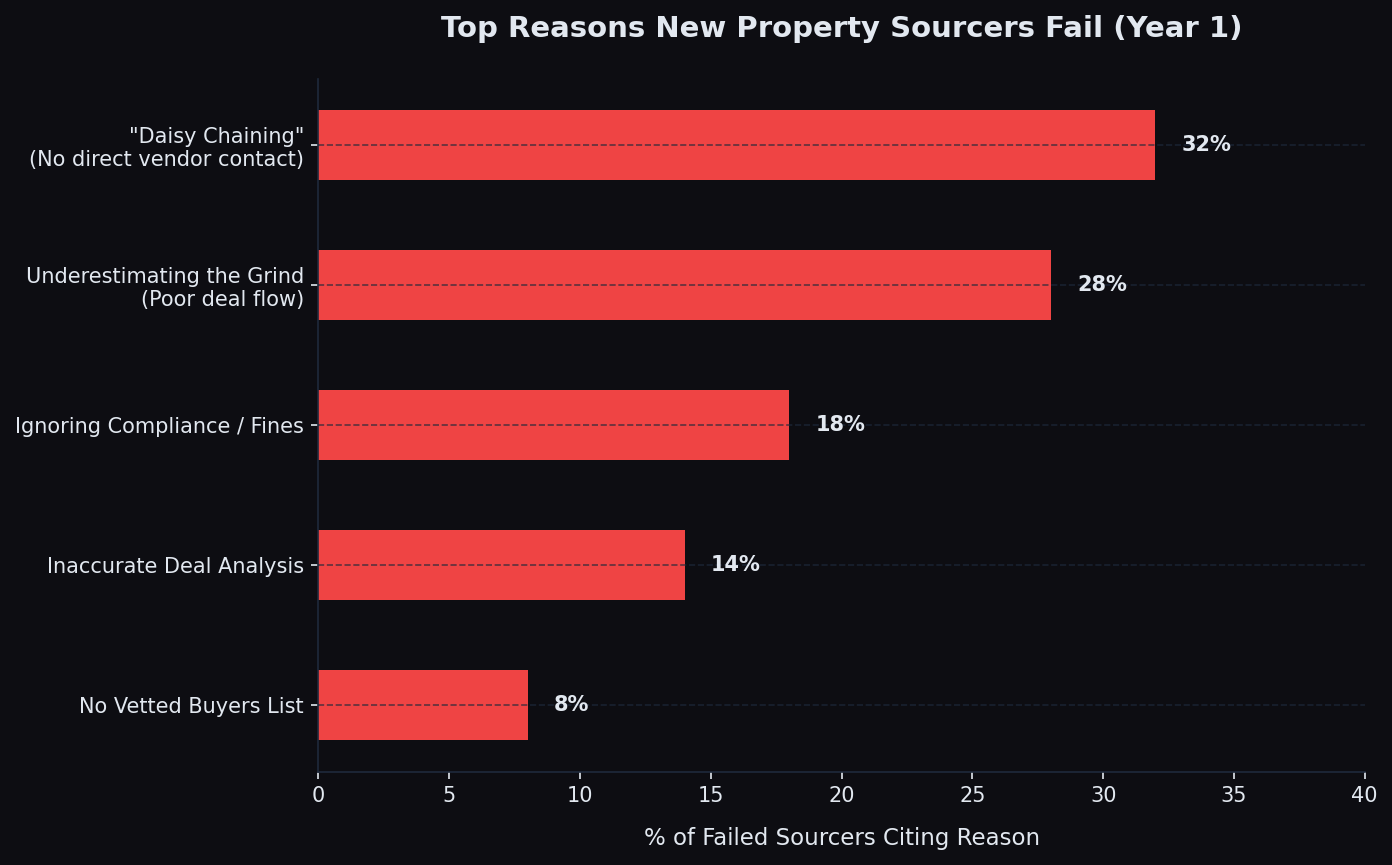
Why Do So Many Property Sourcers Fail?
Despite the low financial barrier to entry, the dropout rate for new property sourcers is exceptionally high.
- Ignoring Compliance: Operating illegally without AML registration or Redress Scheme membership quickly leads to massive fines from Trading Standards and total reputational destruction.
- "Daisy Chaining": This is a toxic practice where a novice sourcer finds a deal from another sourcer and tries to market it to their own list, adding a markup, without having direct contact with the vendor. Professional investors despise this. You must go direct-to-vendor or direct-to-agent.
- Underestimating the Grind: Uncovering a genuine BMV deal is difficult. It requires sending hundreds of letters, making dozens of calls, and facing constant rejection from agents and vendors. Many quit when they realize it isn't easy passive income.
- Poor Deal Analysis: Overestimating the GDV and underestimating the refurb costs is the hallmark of an amateur. When the investor runs their own numbers and finds your deal pack inaccurate, you will be blacklisted.
To survive, you must operate with institutional rigor. Read our comprehensive breakdown on property sourcing companies in the UK to understand what elite firms are doing differently.
Final Thoughts: The Path to Professional Deal Sourcing
Becoming a property sourcer in the UK offers an unparalleled entry point into the lucrative world of real estate investing. It requires minimal initial capital—less than £1,500 to structure legally and professionally—but demands maximum hustle, analytical precision, and uncompromising integrity.
Your entire sourcing business will live and die by your reputation. Provide conservative, data-heavy deal packs, operate in full compliance with HMRC and the estate agency regulations, and focus on building genuine, long-term relationships with a small group of active, capitalized investors.
By taking this professional, rigorous approach, you stop being just another "deal sourcer" and become an indispensable property investment advisor accelerating your clients' wealth.
If you are serious about accelerating your real estate career, whether you aim to source for others or eventually deploy your own capital, mastering these fundamental sourcing skills is the ultimate cheat code for the UK market. You can explore how these high-yield strategies tie back into corporate wealth strategies like legal tax reduction to holistically grow a severe property portfolio.
Ready to dive deeper into the mechanics of high-yield UK property? Check out our ultimate guide to the first £100k to see how early-stage capital velocity works.
Stop being a landlord. Start being an investor.
Shaded Canvas introduces serious capital to vetted UK property opportunities — targeting 12–16% net returns.
Start Investing →